

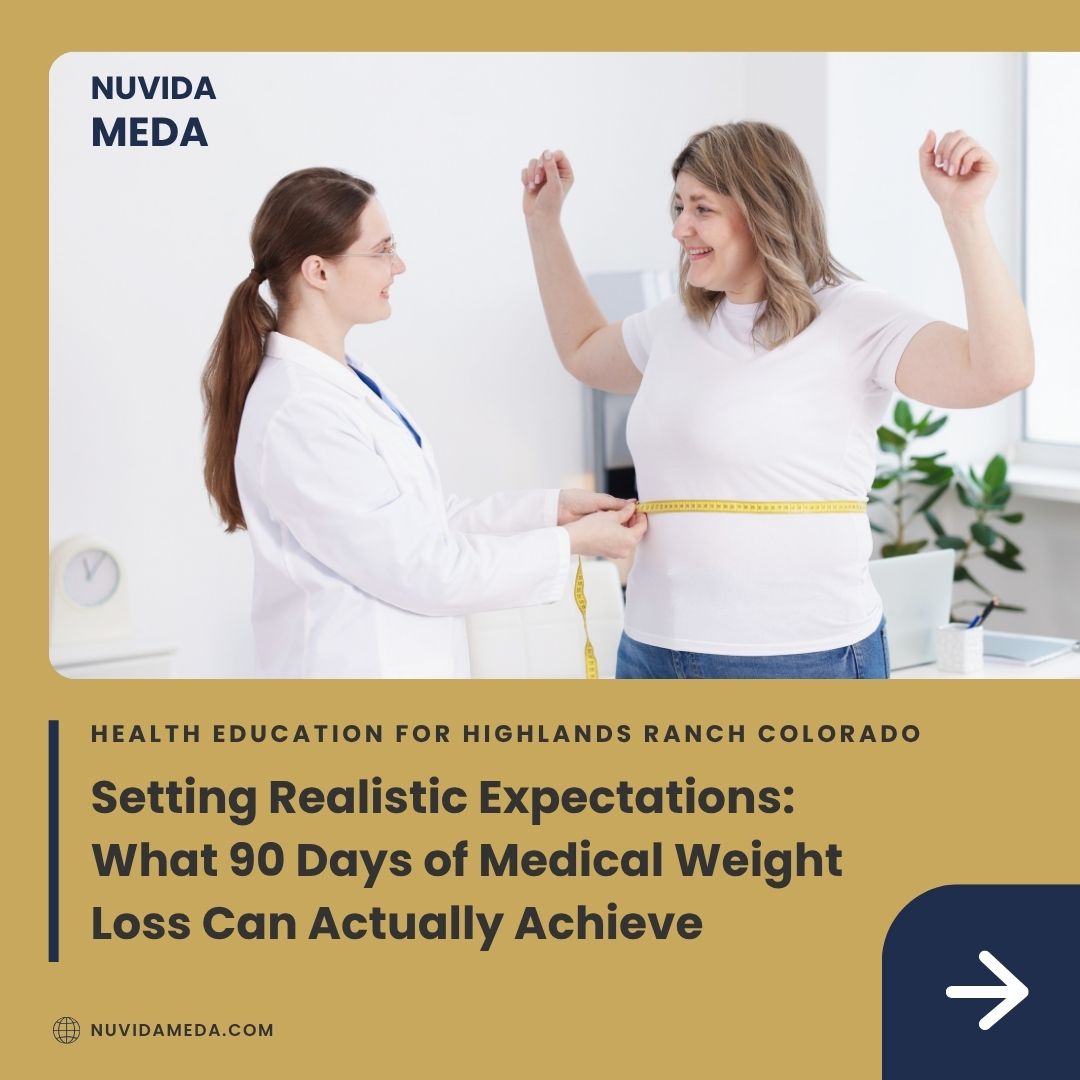
When starting a medical weight loss program, one of the first questions many people ask is, “How much weight will I lose?”
It’s an understandable question, but it’s not always the most helpful one.
Successful medical weight loss isn’t just about the number on the scale. It’s about improving your overall health, building sustainable habits, and creating a plan that works with your body—not against it. Every person’s journey is different, and progress depends on factors such as metabolism, lifestyle, medical history, and adherence to a personalized therapy plan.
If you’re considering physician-led medical weight loss, understanding what the first 90 days may realistically look like can help you begin your journey with confidence and realistic expectations.
Why 90 Days Matters
Three months is long enough to begin establishing healthier habits and evaluating how your body responds to a personalized therapy plan.
Unlike crash diets or short-term programs that promise dramatic transformations, physician-led medical weight loss focuses on steady, sustainable progress.
During the first 90 days, your care team is learning how your body responds, monitoring your progress, and making adjustments when appropriate. This period is often about building a strong foundation for long-term success rather than chasing rapid results.
The First Month: Understanding Your Health
The first few weeks are typically focused on evaluation and planning rather than immediate dramatic changes.
Your initial consultation may include:
- A detailed review of your medical history
- Discussion of previous weight loss attempts
- Review of lifestyle habits
- Evaluation of your current medications
- Laboratory testing when appropriate
- A conversation about your personal goals
This information helps your physician develop a therapy plan that’s tailored specifically to your needs.
Depending on your situation, your plan may include nutrition guidance, increased physical activity, behavioral strategies, metabolic support, or FDA-approved weight loss medications when clinically appropriate.
Most importantly, you’ll leave with a clear roadmap rather than trying to figure everything out on your own.
Building New Habits
One of the greatest benefits of physician-led care is that it focuses on habits you can realistically maintain.
During the first month, many patients begin working on areas such as:
- Eating balanced meals
- Improving hydration
- Increasing daily movement
- Creating consistent sleep routines
- Managing stress
- Following personalized nutrition recommendations
These changes may seem simple, but over time they often create meaningful improvements in overall health.
The Second Month: Evaluating Progress
Around the second month, your physician has more information about how your body is responding.
Rather than following a fixed program, your care plan can be adjusted based on your progress.
This may include:
- Reviewing weight trends
- Discussing energy levels
- Evaluating nutrition habits
- Assessing physical activity
- Monitoring medications if prescribed
- Adjusting recommendations based on your experience
This ongoing support is one of the biggest differences between physician-led care and commercial weight loss programs.
Instead of receiving the same advice month after month, your therapy evolves as your needs change.
Looking Beyond the Scale
Many people naturally focus on pounds lost.
While weight is one measurement of progress, it isn’t the only one.
During the first 90 days, patients may also notice improvements in areas such as:
- Increased energy
- Better sleep quality
- Improved confidence
- Healthier eating habits
- More consistent routines
- Greater understanding of nutrition
- Increased motivation
These changes often support long-term success because they create healthier daily behaviors that extend beyond a specific program.
The Third Month: Strengthening Long-Term Success
By the third month, many patients have established routines that feel more natural.
Instead of constantly starting over every Monday, they’re learning how to make healthier choices that fit their everyday lives.
This stage often focuses on:
- Continuing healthy eating habits
- Maintaining physical activity
- Monitoring progress
- Addressing challenges
- Refining long-term goals
- Adjusting therapy when appropriate
Your physician continues working with you to ensure your plan remains aligned with your health needs and lifestyle.
Why Results Vary from Person to Person
One of the biggest misconceptions about medical weight loss is that everyone should achieve the same results.
In reality, every individual responds differently.
Factors that may influence progress include:
- Starting weight
- Age
- Metabolic health
- Hormonal changes
- Existing medical conditions
- Sleep quality
- Stress levels
- Physical activity
- Nutrition habits
- Consistency with the therapy plan
This is why physician-led care emphasizes personalization rather than comparing one patient’s journey to another’s.
Medical Weight Loss Is More Than Medication
Because GLP-1 medications receive so much media attention, many people assume they are the entire solution.
In reality, medications are only one possible component of a comprehensive care plan.
Depending on your individual needs, your physician may recommend:
- Personalized nutrition guidance
- Lifestyle modifications
- Behavioral support
- Increased physical activity
- Ongoing medical monitoring
- FDA-approved medications when appropriate
- Regular follow-up appointments
The goal is to develop healthy habits that support your long-term health rather than relying on temporary solutions.
Why Physician-Led Support Makes a Difference
One reason many commercial weight loss programs fall short is the lack of personalized follow-up.
Your body changes over time.
Your plan should change too.
Regular appointments allow your physician to:
- Answer your questions
- Monitor your progress
- Review laboratory findings when applicable
- Adjust therapy recommendations
- Provide accountability
- Help you overcome challenges
This ongoing partnership can make it easier to stay engaged and motivated throughout your journey.
Setting Healthy Expectations
One of the greatest advantages of physician-led medical weight loss is that it encourages realistic expectations.
Rather than chasing unrealistic promises, you’ll work with your physician to establish goals that fit your health, lifestyle, and long-term priorities.
Remember that progress isn’t always linear.
Some weeks may show greater changes than others.
Occasional plateaus are normal.
The important thing is maintaining consistency and making adjustments when needed under medical supervision.
Questions to Ask During Your First Consultation
If you’re considering medical weight loss, your consultation is an excellent opportunity to learn more about the process.
You might ask:
- What should I realistically expect during my first 90 days?
- How will my therapy plan be personalized?
- What role do nutrition and physical activity play?
- How often will I have follow-up appointments?
- How will progress be measured beyond weight alone?
- What happens if my plan needs to be adjusted?
These conversations help ensure you understand your options and feel confident moving forward.
Choosing a Physician-Led Weight Loss Program
The best medical weight loss programs focus on education, personalization, and long-term health—not quick fixes.
Look for a clinic that offers:
- Comprehensive evaluations
- Physician-led care
- Individualized therapy plans
- Ongoing support
- Medical supervision
- Evidence-based recommendations
- A focus on sustainable lifestyle changes
These elements provide a stronger foundation for lasting success than programs built around restrictive diets or short-term solutions.
Looking for a Weight Loss Doctor in Highlands Ranch?
If you’re searching for a weight loss doctor Highlands Ranch CO, choosing a physician-led clinic can help you receive personalized care based on your unique health needs and goals.
At NuVida Medical & Aesthetics, every patient’s journey begins with a comprehensive consultation, thoughtful evaluation, and customized therapy plan. Rather than offering one-size-fits-all solutions, the team takes time to understand your medical history, lifestyle, and long-term objectives before recommending a course of care.
Throughout your journey, you’ll receive ongoing guidance, medical oversight, and adjustments designed to support healthy, sustainable progress.
Take the First Step Toward Personalized Care
Beginning a medical weight loss program doesn’t require perfection—it starts with a conversation.
If you’re ready to learn more about physician-led medical weight loss, schedule a consultation with NuVida Medical & Aesthetics. Together, you can discuss your health history, review your goals, and create a personalized plan designed to support your overall wellness.
Every journey is different, but with individualized care, ongoing support, and realistic expectations, you can take meaningful steps toward better health—one decision at a time.