


WOMEN’S HORMONE HEALTH
Perimenopause and Menopause Can Affect the Whole Picture
Hot flashes are only one possible symptom. Sleep, mood, weight, focus, libido, vaginal health, and energy may all change during the menopause transition.
← Back to the NuVida Health Library
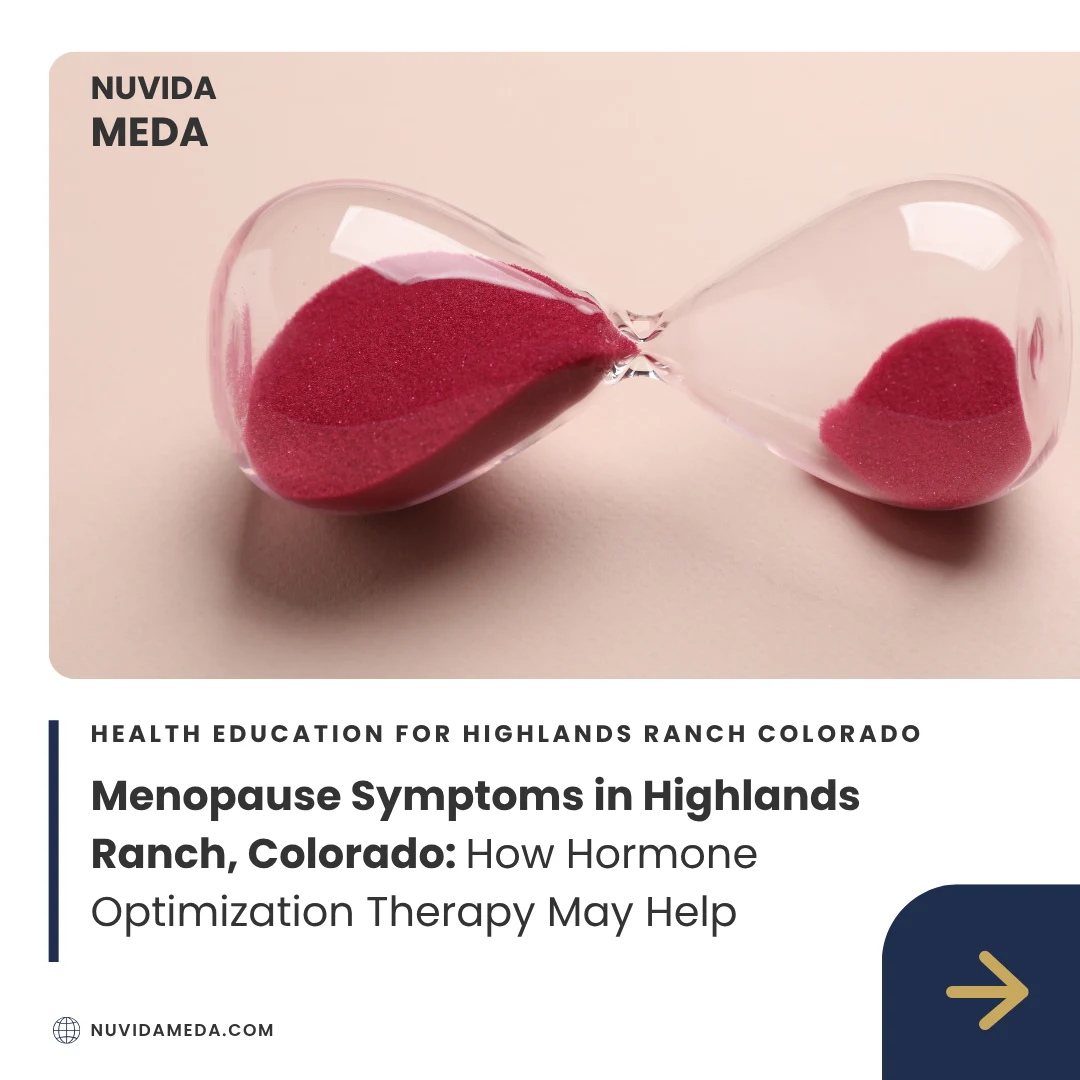
The Transition Can Begin Before Periods Stop
Perimenopause can begin years before the final menstrual period. Symptoms may be inconsistent, change over time, and overlap with thyroid, sleep, stress, medication, or metabolic concerns.
A physician-led conversation can help clarify what is typical, what deserves additional evaluation, and which hormonal or non-hormonal options may fit your goals and medical history.
Does This Feel Familiar?
The menopause transition can affect several areas of health and daily life.
Why the Full Picture Matters
Symptoms may reflect hormonal change while also overlapping with other medical and lifestyle factors.
Changing Estrogen and Progesterone
Fluctuating levels can influence cycles, temperature regulation, sleep, mood, and other symptoms.
Testosterone and Sexual Wellness
Androgen changes may overlap with libido, energy, muscle, and sexual function.
Sleep and Stress
Night sweats, insomnia, caregiving, work stress, and life transitions may compound symptoms.
Bone and Cardiometabolic Health
The menopause transition is also a useful time to review bone, heart, weight, and metabolic risk.
It May Be Time for a Physician-Led Conversation If:
- Symptoms are disrupting sleep or daily functioning
- Bleeding patterns are heavy, prolonged, or unusual
- Mood, cognition, libido, or vaginal symptoms are affecting quality of life
- You want to understand hormone and non-hormone therapy options
Your Care Begins With Answers
Care starts with symptoms, health history, risks, goals, and appropriate testing rather than a one-size-fits-all protocol.
Listen
Review symptoms, cycle changes, history, medications, and goals.
Evaluate
Complete appropriate clinical review and testing.
Personalize
Discuss hormone and non-hormone options, benefits, and risks.
Monitor
Review response and adjust the plan over time.
Questions About Perimenopause and Menopause
What is the difference between perimenopause and menopause?
Perimenopause is the transition leading up to menopause. Menopause is reached after 12 consecutive months without a menstrual period, when no other cause explains the change.
Do I need hormone therapy?
No single therapy is right for everyone. Options depend on symptoms, medical history, risks, goals, and personal preferences.
Can perimenopause cause sleep and mood changes?
Hormonal fluctuations and symptoms such as night sweats may affect sleep and mood, although other contributors should also be considered.
Should unusual bleeding be evaluated?
Heavy, prolonged, frequent, or postmenopausal bleeding should be discussed with an appropriate healthcare professional.
Feel Heard. Understand Your Options.
Begin with a physician-led conversation about what has changed and what you want to feel different.
This page is provided for general educational purposes only and is not intended to diagnose, treat, cure, or prevent any disease. It does not replace personalized medical advice, diagnosis, or therapy from a qualified healthcare professional.
If perimenopause or menopause symptoms are affecting you, NuVida’s care team welcomes patients across the South Denver area, including Highlands Ranch, Lone Tree, Littleton, Centennial, Castle Pines, Parker, Greenwood Village, Castle Rock, and Englewood.
NuVida Medical and Aesthetics
Address: 9137 Ridgeline Blvd #135, Highlands Ranch, CO 80129, United States
Phone Number: +17204173460
ABOUT THIS RESOURCE
Educational content from NuVida Medical & Aesthetics. NuVida is a physician-led clinic in Highlands Ranch. Learn about Mark Paz, MD and the NuVida clinical approach.
Last updated July 29, 2026. Perimenopause and menopause affect people differently. Therapy decisions require an individual review of symptoms, history, risks, and preferences.