
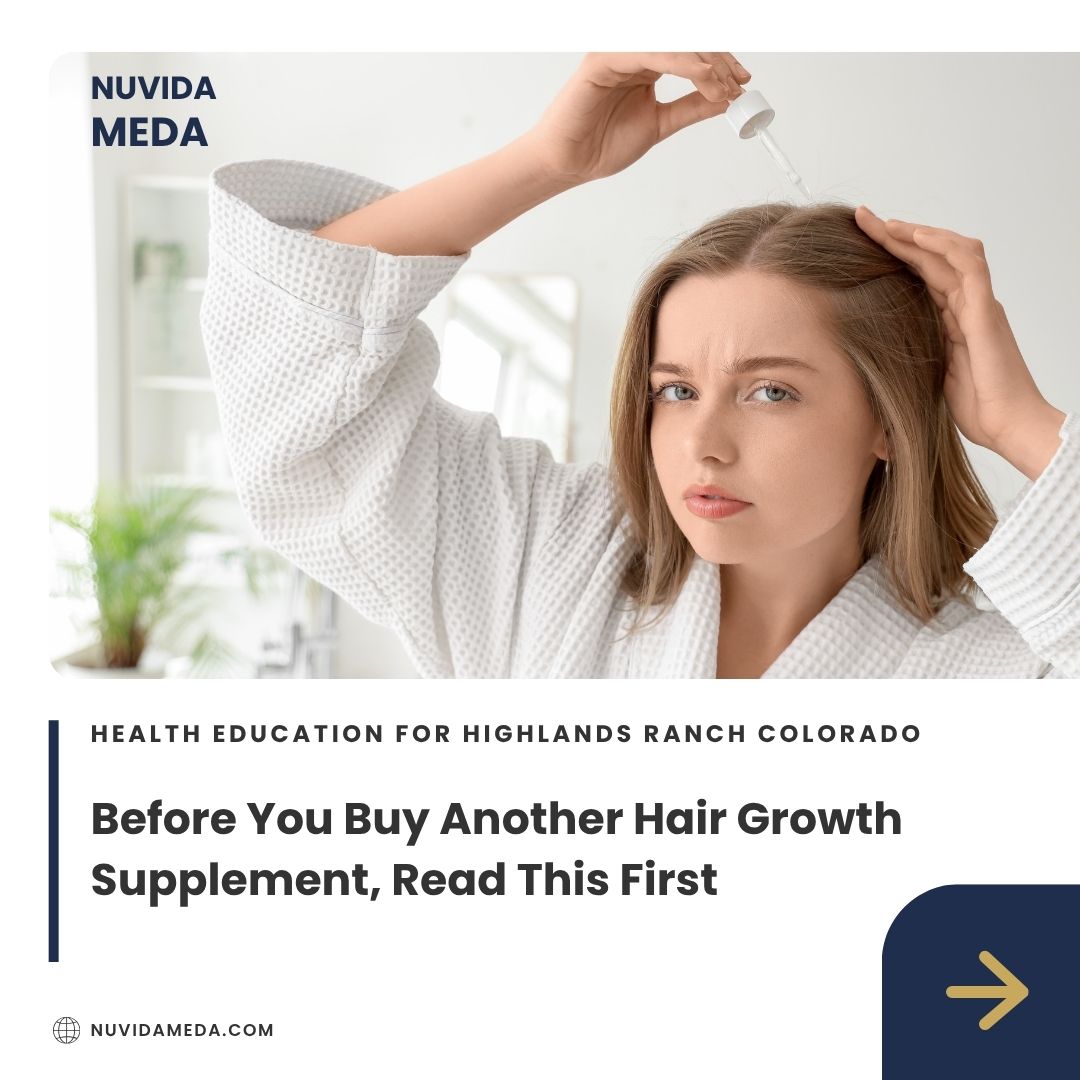
Walk down the vitamin aisle or browse online for just a few minutes, and you’ll quickly discover hundreds of supplements promising thicker, fuller, healthier hair.
Biotin gummies. Marine collagen. Hair vitamins. Herbal blends. Multi-ingredient formulas with dramatic before-and-after photos.
The marketing is compelling. The promises sound reassuring. And if you’re noticing more hair in your brush or a widening part, it’s understandable to want a simple solution.
But here’s the question every woman should ask before spending money on another supplement:
Do you actually know why your hair is thinning?
That’s the question many advertisements never encourage you to ask.
At NuVida Medical and Aesthetics, we believe that healthy hair starts with understanding your overall health. While supplements may have a place in certain situations, they are not a universal answer for every woman experiencing hair loss.
If you’re researching hair restoration for women Highlands Ranch, here’s what you should know before adding another bottle of hair growth supplements to your shopping cart.
Hair Loss Is a Symptom, Not a Diagnosis
One of the biggest misconceptions about hair thinning is that it is a condition by itself.
In reality, hair loss is often a symptom of something else happening within the body.
Possible contributing factors include:
- Hormonal changes
- Genetics
- Iron deficiency
- Thyroid disorders
- Nutritional deficiencies
- Chronic stress
- Certain medications
- Autoimmune conditions
- Metabolic health changes
- Natural aging
Because so many factors can influence healthy hair growth, taking a supplement without understanding the cause is often little more than educated guesswork.
Why Hair Supplements Have Become So Popular
Hair supplements appeal to many women because they seem easy.
There’s no appointment.
No laboratory testing.
No physician consultation.
Just one capsule each day with the promise of healthier hair.
Unfortunately, hair biology is much more complicated than marketing suggests.
Supplements can support normal body function when a nutrient deficiency exists, but they cannot determine whether hormones, thyroid disease, genetics, or another medical condition is contributing to your hair thinning.
That distinction is important because treating the wrong problem rarely produces meaningful results.
Biotin: Helpful for Some, Unnecessary for Many
Biotin is one of the most recognizable ingredients in hair supplements.
It plays an important role in normal metabolism and healthy hair, skin, and nails.
However, true biotin deficiency is uncommon in otherwise healthy adults.
For women who already have adequate biotin levels, taking larger amounts has not consistently been shown to improve hair growth.
Another important consideration is that high-dose biotin supplements can interfere with certain laboratory tests, including some tests used to evaluate thyroid function and heart-related conditions.
If you take biotin regularly, be sure to tell your healthcare provider before having blood work performed.
Collagen: What Does the Evidence Say?
Collagen supplements have become increasingly popular for skin, joints, and hair.
Collagen is a structural protein naturally found throughout the body, and some people choose to take hydrolyzed collagen as part of their wellness routine.
While collagen may support overall nutritional intake, current research regarding its direct effects on hair growth remains limited.
For women whose hair thinning is related to hormonal changes, genetics, or thyroid disease, collagen alone is unlikely to address the underlying issue.
Herbal Ingredients Often Come With Big Claims
Many hair supplements contain proprietary herbal blends.
Common ingredients include:
- Saw palmetto
- Ashwagandha
- Pumpkin seed extract
- Bamboo extract
- Horsetail
- Various botanical compounds
Some of these ingredients have been studied for potential health benefits, but research specific to female hair restoration is often limited or mixed.
Because supplements are not all formulated the same way, quality and ingredient concentrations can vary significantly between manufacturers.
This makes it difficult to predict how an individual product may perform.
More Isn’t Always Better
It is easy to assume that taking additional vitamins will automatically improve hair growth.
Unfortunately, that is not how the body works.
Once your nutritional needs are met, taking more of certain vitamins does not necessarily produce better results.
In some cases, excessive supplementation may even be counterproductive or increase the risk of unwanted side effects.
That is one reason physician-guided recommendations are preferable to self-prescribing multiple supplements based solely on online advertisements.
When Supplements May Actually Be Helpful
This doesn’t mean supplements never have a role.
They certainly can.
For women with documented nutritional deficiencies or increased nutritional needs, targeted supplementation may become an important part of a personalized therapy plan.
Examples may include deficiencies involving:
- Iron
- Vitamin D
- Vitamin B12
- Zinc
- Protein intake
- Other nutrients identified during evaluation
The key difference is that supplementation is based on clinical findings rather than assumptions.
Hair Loss Often Has Multiple Causes
One reason many women become frustrated is that they expect a single supplement to solve a problem that has several contributing factors.
For example, a woman may simultaneously experience:
- Perimenopause
- Iron deficiency
- Chronic stress
- Poor sleep
- Thyroid changes
- Female pattern hair thinning
No single supplement can address all of these issues.
A comprehensive evaluation helps identify the factors that deserve attention so therapy can be personalized.
What a Physician-Led Evaluation Can Reveal
At NuVida Medical and Aesthetics, we believe understanding the “why” behind your hair thinning is just as important as discussing therapy options.
Your evaluation may include:
- A detailed medical history
- Review of your medications
- Family history of hair loss
- Discussion of lifestyle habits
- Nutritional assessment
- Review of hormonal symptoms
- Laboratory testing when clinically appropriate
This process allows your physician to determine whether nutritional deficiencies are present or whether another factor may be contributing to your symptoms.
Hair Restoration Often Requires More Than Supplements
Depending on your evaluation, your physician may recommend a personalized therapy plan that could include one or more approaches.
These may include:
- Nutrition counseling
- Personalized supplement recommendations
- Hormone evaluation when clinically appropriate
- Physician-directed topical therapies
- Platelet-rich plasma (PRP) therapies when appropriate
- Hair restoration procedures
- Lifestyle modifications
- Ongoing monitoring and follow-up
Rather than relying on a single product, comprehensive care addresses your individual needs.
Questions to Ask Before Buying Any Hair Supplement
Before purchasing another hair growth product, consider asking yourself these questions:
- Do I know why my hair is thinning?
- Have I discussed my symptoms with a physician?
- Could hormones, thyroid health, or nutrition be contributing?
- Have I had laboratory testing if appropriate?
- Is this supplement supported by evidence, or only marketing?
- Could this product interfere with any medications or medical conditions?
- Am I treating the cause, or only the symptom?
These questions can help you make more informed decisions and avoid spending money on products that may not address your specific situation.
Personalized Care Delivers Better Answers
Every woman’s hair loss story is different.
Some women primarily experience hormone-related changes.
Others have nutritional deficiencies.
Some have hereditary hair thinning.
Many have several contributing factors working together.
That is why physician-led care focuses on understanding the complete picture instead of recommending the same supplement for every patient.
At NuVida Medical and Aesthetics, our goal is to provide medical clarity so you can make informed decisions about your health.
Hair Restoration for Women in Highlands Ranch Starts with Understanding the Cause
If you’re searching for hair restoration for women Highlands Ranch, remember that supplements are just one possible tool. They are not a substitute for understanding what may be causing your hair thinning.
At NuVida Medical and Aesthetics, we begin with a comprehensive evaluation designed to identify the factors that may be affecting your hair health. Whether your concerns are related to hormones, nutrition, stress, metabolic health, thyroid function, genetics, or multiple factors, our physician-led approach helps guide personalized recommendations based on your unique needs.
Rather than chasing the latest supplement trend, we focus on helping you understand the underlying cause so your therapy plan is both thoughtful and individualized.
Take the First Step Toward Healthier Hair
You don’t have to keep guessing which supplement might finally work.
If you’ve tried multiple products without seeing the results you hoped for, it may be time to take a different approach.
At NuVida Medical and Aesthetics, we provide physician-led evaluations for women experiencing hair thinning and hair loss. By understanding your symptoms, reviewing your health history, and performing appropriate evaluations, we can help identify the factors contributing to your hair changes and discuss therapy options that make sense for your situation.
If you’re looking for hair restoration for women Highlands Ranch, schedule a consultation with our experienced team today. Together, we’ll create a personalized plan designed to support your hair health and your overall well-being.
Schedule your consultation today and discover how a personalized, physician-led approach can help you move beyond guesswork and toward healthier, fuller-looking hair.