

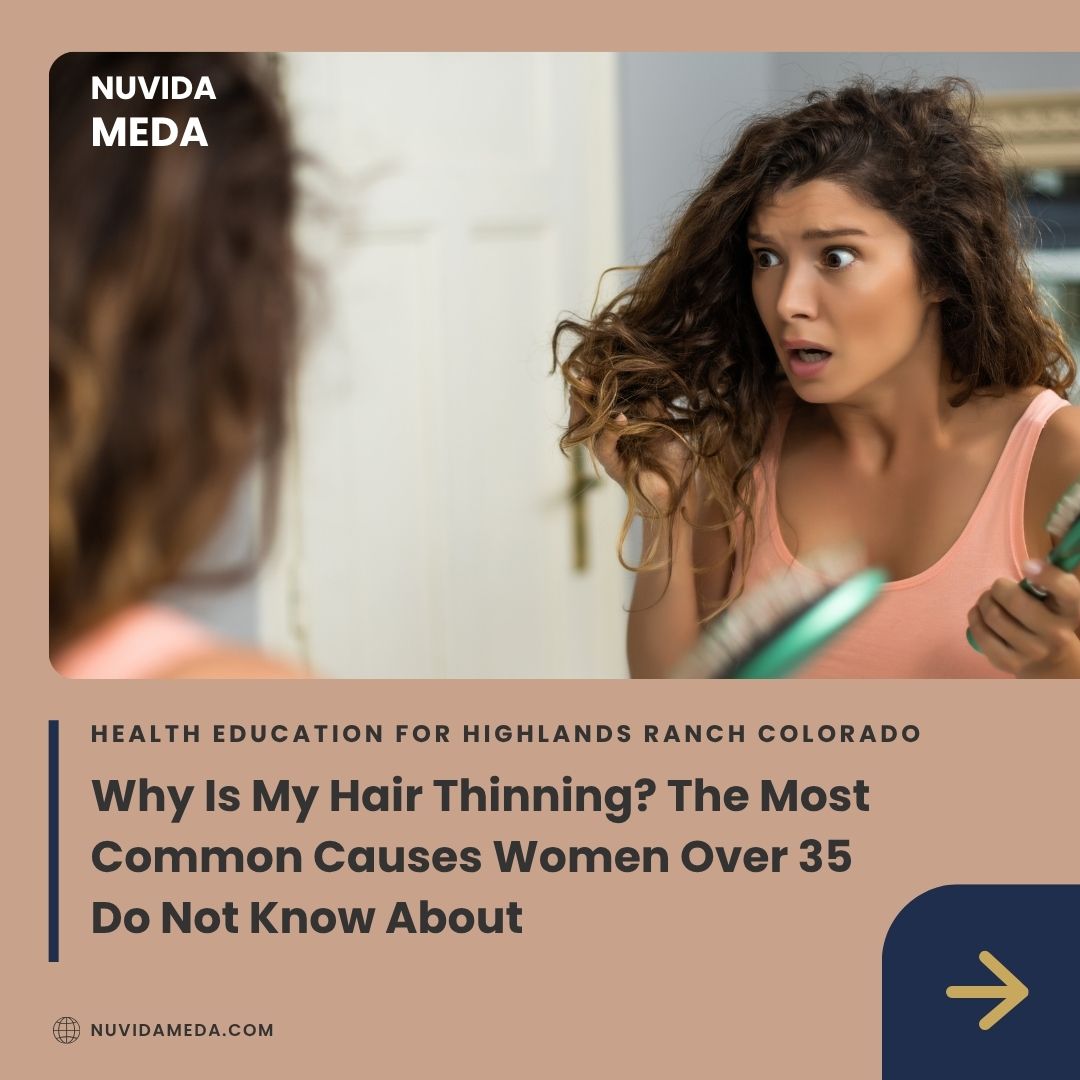
Finding more hair in your brush, noticing a widening part, or seeing less volume than you used to can be upsetting. For many women over 35, hair thinning seems to happen gradually, making it easy to overlook until it becomes difficult to ignore.
One of the biggest frustrations is not knowing why it’s happening.
You may have changed your shampoo, started taking biotin, or spent hours researching products that promise thicker, healthier hair. Yet despite your efforts, the thinning continues.
The truth is that hair loss is often more complex than it appears. While aging naturally brings changes to your hair, several underlying factors may also contribute to thinning, and many women are never told about them.
At NuVida Medical and Aesthetics, we believe the first step is understanding what may be contributing to your symptoms. Rather than recommending the same solution for everyone, we take a physician-led approach that considers your overall health, symptoms, and laboratory findings when appropriate.
If you’ve been searching for hormone imbalance hair loss therapy Highlands Ranch, understanding these often-overlooked causes can help you make informed decisions about your health.
Hair Thinning Is More Common Than Many Women Realize
Hair changes are incredibly common after age 35.
For some women, the change is subtle. Others notice increased shedding, a thinner ponytail, or visible scalp along the part line.
Although these changes can affect confidence, they are not always caused by a single issue. Hair growth depends on many systems working together, including hormones, nutrition, metabolism, stress levels, genetics, and overall health.
That is why simply treating the hair itself may not address the underlying reason it is becoming thinner.
1. Hormonal Changes During Perimenopause and Menopause
One of the most common yet overlooked contributors to hair thinning is changing hormone levels.
As women enter their late 30s and 40s, hormone production naturally begins to change. Estrogen and progesterone levels may fluctuate during perimenopause before gradually declining during menopause.
Because these hormones help support the normal hair growth cycle, changes may affect:
- Hair thickness
- Hair density
- Growth rate
- Shedding patterns
Some women notice more hair in the shower, while others simply feel like their hair no longer has the fullness it once did.
Not every woman experiences these changes in the same way, which is why physician-guided evaluation is important.
2. Thyroid Changes That Often Go Unrecognized
The thyroid influences many essential functions throughout the body, including metabolism and healthy hair growth.
When thyroid hormone levels are outside the normal range, some women may notice:
- Hair thinning
- Fatigue
- Dry skin
- Weight changes
- Feeling unusually cold or warm
Because these symptoms overlap with many other conditions, thyroid-related concerns can sometimes go unnoticed without appropriate medical evaluation.
If thyroid dysfunction is suspected, your physician may recommend laboratory testing as part of a comprehensive assessment.
3. Iron and Nutritional Deficiencies
Healthy hair depends on more than hormones.
Your body also needs adequate nutrition to support normal hair growth.
Low iron stores, inadequate protein intake, and certain vitamin deficiencies may contribute to increased shedding or slower hair growth.
Instead of guessing which supplements to take, physician-guided evaluation can help determine whether nutritional factors deserve further investigation.
Personalized recommendations are often more effective than relying on generalized advice found online.
4. Chronic Stress Can Affect Hair Growth
Stress affects far more than your emotional well-being.
Periods of prolonged physical or emotional stress may influence the normal hair growth cycle, causing more hairs to enter the shedding phase.
Some women notice increased hair loss several months after:
- Major illness
- Surgery
- Significant emotional stress
- Rapid weight loss
- Pregnancy
- Other major life events
This type of shedding is different from hereditary hair loss, making accurate evaluation especially important.
5. Changes in Metabolic Health
Your metabolism influences nearly every system in your body, including the health of your hair.
Conditions involving blood sugar regulation, insulin resistance, and overall metabolic health may affect how your body functions.
While metabolic health is only one possible contributor to hair thinning, it is often overlooked during self-diagnosis.
At NuVida, physician-led evaluations consider your overall health rather than focusing on a single symptom.
6. Certain Medications May Play a Role
Some prescription medications may contribute to hair thinning as a potential side effect.
This does not mean you should stop taking prescribed medication on your own.
Instead, discuss any concerns with your healthcare provider, who can review your medications alongside your symptoms and determine whether additional evaluation is appropriate.
7. Genetics Still Matter
Family history remains one of the most common contributors to female pattern hair thinning.
If your mother, grandmother, or sisters experienced gradual hair loss, genetics may influence your own hair health.
However, genetics do not always tell the whole story.
Many women have several contributing factors occurring at the same time, making comprehensive evaluation more valuable than assuming genetics are solely responsible.
Why Over-the-Counter Products Often Disappoint
The market is filled with shampoos, vitamins, oils, and supplements that promise thicker hair.
Unfortunately, many of these products focus only on the symptom instead of understanding why the hair is thinning in the first place.
Without identifying contributing factors, even expensive products may produce disappointing results.
A personalized evaluation allows therapy recommendations to be based on your individual health rather than marketing claims.
A Physician-Led Evaluation Looks Beyond Your Hair
At NuVida Medical and Aesthetics, we believe your symptoms deserve thoughtful attention.
Your consultation may include:
- Discussion of your hair concerns
- Review of your medical history
- Medication review
- Lifestyle assessment
- Discussion of additional symptoms
- Laboratory testing when appropriate
- Development of a personalized care plan
Rather than relying on assumptions, this process helps identify factors that may be influencing your overall health.
Hair Thinning Is Sometimes a Clue, Not the Whole Story
Many women who experience hair thinning also notice other subtle changes.
You may also be experiencing:
- Fatigue
- Poor sleep
- Weight changes
- Mood changes
- Brain fog
- Reduced energy
- Changes in libido
- Feeling unlike yourself
While these symptoms do not automatically indicate a hormone imbalance, they may provide important clues during a physician evaluation.
Looking at your health as a whole often provides more meaningful insight than focusing on a single concern.
Personalized Care Instead of Guesswork
There is no single solution that works for every woman experiencing hair thinning.
Depending on your individual evaluation, your physician may recommend a personalized plan that could include:
- Hormone evaluation when appropriate
- Nutritional guidance
- Lifestyle recommendations
- Personalized supplement recommendations
- Weight management support when clinically appropriate
- Hair restoration options
- Ongoing physician follow-up
Every recommendation is based on your symptoms, health history, and clinical findings.
Finding Hormone Imbalance Hair Loss Therapy in Highlands Ranch
If you’ve been searching online for hormone imbalance hair loss therapy Highlands Ranch, you’ve probably discovered an overwhelming number of products, supplements, and advertised solutions.
The challenge is that hair thinning rarely has just one cause.
At NuVida Medical and Aesthetics, we begin by listening to your concerns, reviewing your medical history, and understanding your overall health. When appropriate, laboratory testing helps guide personalized recommendations instead of relying on guesswork.
Our goal is to provide medical clarity so you can better understand what may be contributing to your hair changes and explore physician-guided options that fit your individual needs.
You Do Not Have to Keep Guessing
Hair thinning can affect more than your appearance. It can also affect your confidence and leave you wondering whether what you’re experiencing is simply part of getting older.
While some changes are a natural part of aging, others deserve a closer look.
You should not have to guess your way through your health.
At NuVida Medical and Aesthetics, we take a physician-led, personalized approach to helping women better understand concerns such as hair thinning, hormone changes, metabolic health, and overall wellness.
If you are looking for hormone imbalance hair loss therapy Highlands Ranch, schedule a consultation with our experienced team. Together, we can review your symptoms, discuss your health history, and determine the next appropriate steps based on your individual needs.
Schedule your consultation today and take the first step toward understanding what may be contributing to your hair thinning.