

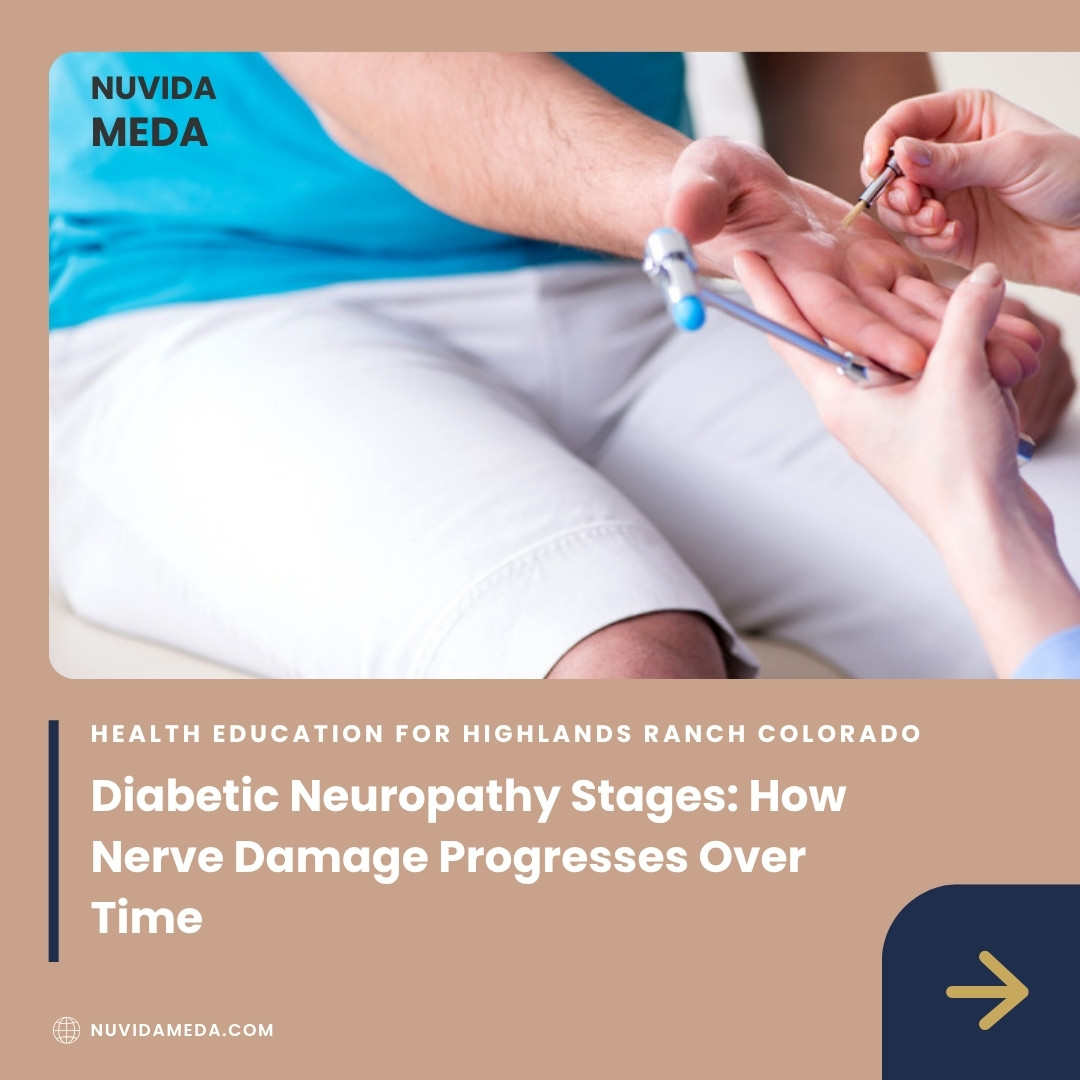
If your feet have started to feel numb, prickly, or strangely hot by the end of the day, you are not alone. For many people living with diabetes or prediabetes, those small sensations are the first sign that nerves have been under strain for a while.
Diabetic neuropathy rarely arrives overnight. It usually develops quietly across years, which is why understanding how it tends to progress may help you raise the question with a physician earlier rather than later.
This article is for educational purposes only and is not medical advice or a diagnosis. Treatment decisions should always be made with a qualified healthcare provider.
What Diabetic Neuropathy Is
Nerves carry signals between your brain and the rest of your body. They also depend on a steady supply of fuel and healthy small blood vessels to stay well nourished.
When blood sugar runs high for long stretches, both of those conditions may be disrupted. Over time, that strain can show up as changes in sensation, and it is part of the broader family of peripheral neuropathy.
Why nerves are sensitive to blood sugar
Nerve fibers are long, thin, and metabolically busy, which leaves them with little margin for error. Several factors may contribute to the strain researchers describe:
- Elevated glucose, which studies suggest may alter how nerve cells handle fuel
- Changes in the tiny blood vessels that supply the nerves
- Inflammation and oxidative stress that may accumulate over years
- Nutrient gaps, including B vitamins, that can affect nerve function
- Additional contributors such as thyroid issues, alcohol use, or certain medications
Where symptoms usually start
The longest nerves in the body are generally affected first, which is why toes and feet are the most common starting point.
Clinicians often describe this as a stocking-and-glove pattern, because it may work upward from the feet and sometimes appears later in the hands.
The Diabetic Neuropathy Stages Patients Describe
Nerve change is a spectrum rather than a set of sharp lines. Still, most patients who sit down with us in Highlands Ranch recognize themselves somewhere in the following progression.
Early: subtle, intermittent, easy to dismiss
In the earliest phase, sensations tend to come and go. They are often blamed on a long day, new shoes, or standing too much:
- Occasional tingling or a pins-and-needles feeling in the toes
- Brief numb patches that resolve on their own
- Feet that feel warm or prickly at night but normal by morning
- A sense that socks or sheets feel different than they used to
Middle: persistent and harder to ignore
As nerve irritation becomes more constant, many patients report that symptoms start shaping their evenings and their sleep.
- Burning or aching that shows up most nights
- Sharp, electric sensations that arrive without warning
- Sensitivity that makes light touch uncomfortable
- Numbness that no longer fully clears
- Balance that feels less certain on uneven ground
Later: reduced protective sensation
In more advanced nerve change, the problem is often less about pain and more about what a person can no longer feel.
Reduced sensation may mean a blister, pebble, or small cut goes unnoticed, which is why foot checks and physician follow-up matter so much at this point. Results vary from person to person, and the pace of change is individual.
Why Early Diabetic Neuropathy Is So Often Missed
Most people do not walk into an office because of a tingle. They mention it in passing, months or years after it began.
- Symptoms fluctuate, so they feel unimportant
- Blood sugar may have been borderline for years without a formal diagnosis
- An A1C in the gray zone can be treated as nothing to act on yet
- Nerve symptoms get attributed to age, exercise, or footwear
- Patients assume nothing can be done, so they never raise it
That last assumption is the one we hear most often, and it is worth questioning with a physician rather than accepting on your own.
What May Help Slow the Progression
There is no guaranteed outcome with nerve symptoms, and no honest clinician will promise one. What a careful plan can do is address the conditions that may be driving the strain.
- Working on glucose and insulin patterns, not just a single number
- Reviewing labs that may point to contributing factors, when clinically appropriate
- Addressing nutrient gaps that can affect nerve health
- Supporting circulation through movement suited to your body
- Monitoring symptoms over time instead of checking once and moving on
Because blood sugar sits underneath so much of this, the relationship between blood sugar and nerve health is usually where our evaluation begins.
For patients across Highlands Ranch, Lone Tree, and Littleton, that evaluation is the starting point of our neuropathy therapy program.
Why Physician-Led Care Matters
Nerve symptoms have many possible contributors, and sorting through them takes time and clinical judgment rather than a product recommendation.
- Listening to how and when your symptoms actually show up
- Reviewing your full health history, medications, and family history
- Ordering labs when appropriate rather than by default
- Building a personalized plan for your situation, not a template
- Monitoring over months and adjusting as your body responds
That is what physician-led care looks like at our Colorado practice, and it is why we would rather see you early than years into the diabetic neuropathy stages described above.
Schedule Your Consultation
If something in your feet or hands has changed, it is worth a conversation rather than another year of wondering. We will listen first, look at the whole picture, and talk honestly about what may and may not help in your case.
Call (720) 417-3460 or schedule a consultation with NuVida Medical and Aesthetics in Highlands Ranch, CO.