

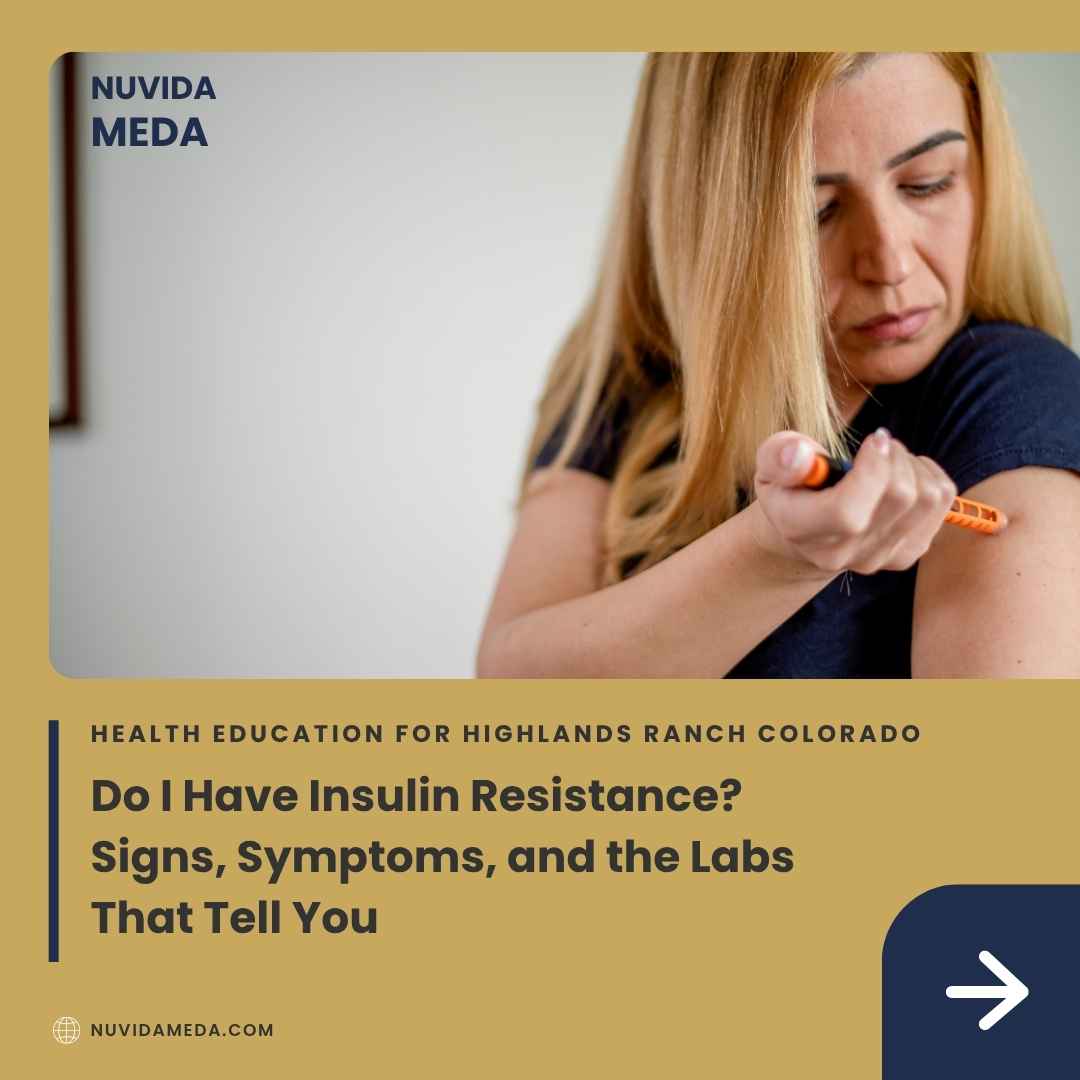
If you have been quietly wondering whether something metabolic is going on with your body, you are not alone.
It is one of the questions we hear most often, usually after someone has spent months blaming themselves for symptoms that have a physiological explanation.
Below are the signs of insulin resistance patients ask us about most in Highlands Ranch, along with the lab work that helps answer the question properly.
This article is for educational purposes only and is not medical advice or a diagnosis. Therapy decisions should always be made with a qualified healthcare provider.
What Are the Most Common Signs of Insulin Resistance?
No single symptom confirms anything. It is the pattern that gets a physician’s attention.
How You Feel Day to Day
The experiences patients describe most often include:
- Energy that dips hard in the early afternoon
- Hunger returning within an hour or two of eating
- Brain fog that lifts after eating and returns later
- Waking between two and four in the morning
- Feeling irritable or shaky when a meal is delayed
What Sometimes Shows Up Physically
There can also be visible or measurable changes, such as:
- Weight concentrating around the waistline
- Skin tags, or darker velvety patches on the neck or underarms
- Blood pressure or triglycerides creeping upward
- Tingling or burning sensations in the feet
- Irregular cycles or worsening premenstrual symptoms
Any of these can have other explanations, which is exactly why a physician evaluation matters rather than a self-diagnosis.
Which Labs Actually Answer the Question?
This is where most patients are surprised, because the test that helps most is often not the one they have already had.
Fasting Insulin
Fasting glucose tells you what your blood sugar is. Fasting insulin tells you how hard your body is working to keep it there.
That second number is frequently the earlier signal, and it is not part of most routine panels.
A1C and Glucose
A1C reflects roughly three months of average blood sugar and helps place you on the spectrum from normal to prediabetes to diabetes.
The Supporting Picture
Depending on your history, your physician may also review:
- A lipid panel, with attention to the triglyceride to HDL relationship
- Liver enzymes and markers of inflammation
- Thyroid function
- Sex hormones, which interact closely with metabolism
Our article on what lab work reveals walks through how these results are read together.
Can Insulin Resistance Be Improved?
Many patients report meaningful improvement in how they feel when a metabolic driver is identified and addressed, though results vary and no outcome can be promised.
Depending on your labs, a plan may involve nutrition and strength training, sleep and stress work, medication when clinically appropriate, or physiologic insulin resensitization.
Do I Need a Referral or a Diagnosis First?
No. Patients across Highlands Ranch, Lone Tree, and Littleton come to us with symptoms and questions rather than a chart full of answers.
Bringing recent labs helps, but it is not required for a first conversation.
Why Physician-Led Care Matters
Online symptom checklists cannot weigh your history, your medications, or the way your symptoms interact.
A physician-led visit in Colorado gives you:
- Someone listening to the full story, not just the numbers
- A health history review that includes family risk
- Labs ordered when clinically appropriate
- A personalized plan rather than generic advice
- Ongoing monitoring as your results change
Schedule Your Consultation
If you recognized yourself in several of the signs above, the next step is information rather than worry.
We will review your history, order the labs that make sense for you, and explain what the results mean without jargon.
Schedule a consultation with NuVida Medical and Aesthetics and start feeling like yourself again.