
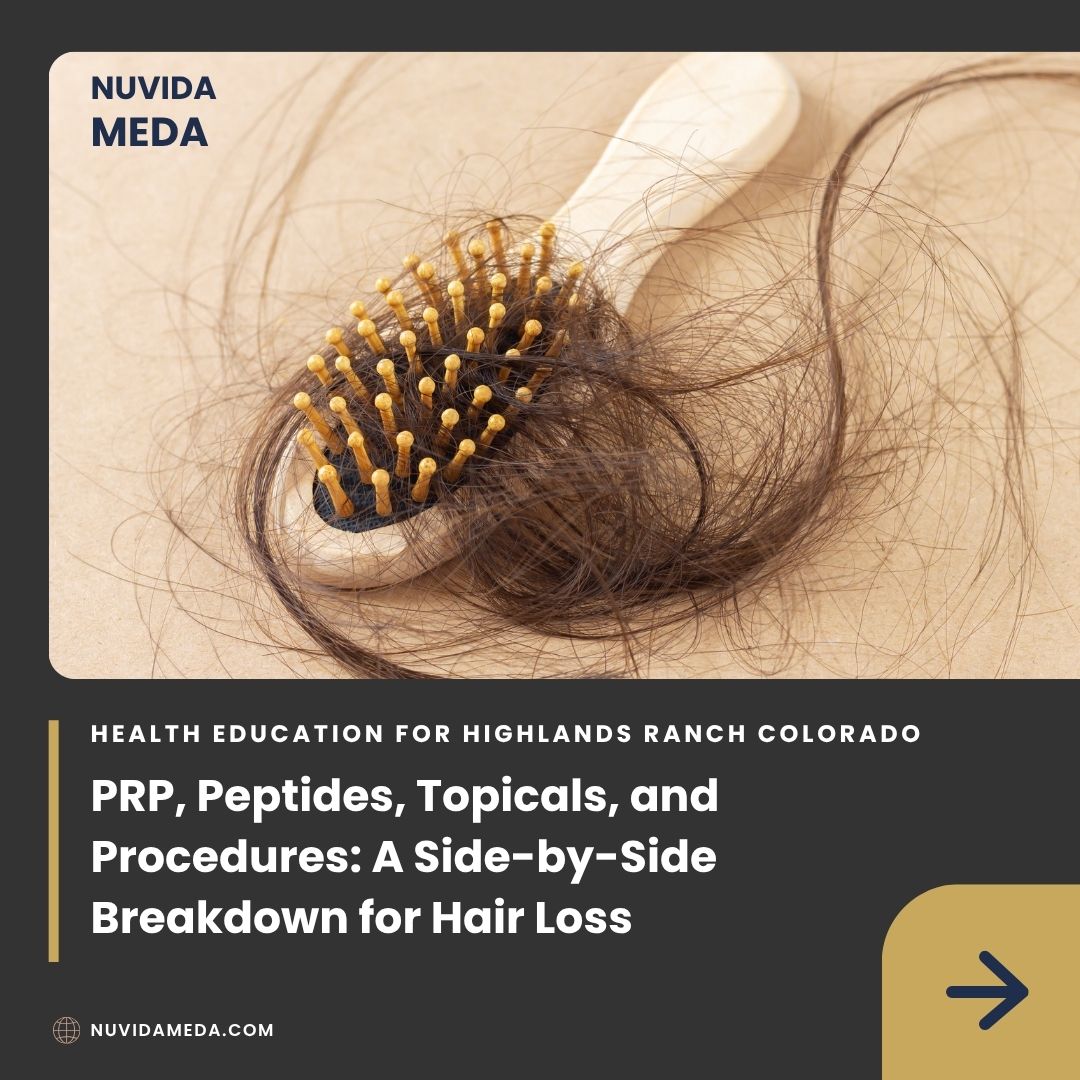
If you’ve started researching treatments for thinning hair, you’ve probably discovered there’s no shortage of options. A quick online search brings up platelet-rich plasma (PRP), peptide therapy, prescription topicals, over-the-counter serums, laser devices, supplements, and countless procedures that all claim to restore thicker, healthier hair.
With so many choices, it’s easy to feel overwhelmed.
The reality is that no single treatment works for every woman because hair loss is rarely caused by one factor alone. Hormonal changes, genetics, nutritional deficiencies, stress, thyroid disorders, metabolic health, and aging can all influence hair growth. That’s why choosing a treatment based solely on advertising or online reviews may not produce the results you’re hoping for.
At NuVida Medical and Aesthetics, we believe the most effective approach begins with understanding why your hair is thinning. Once the underlying contributors are identified, your physician can recommend therapies that are appropriate for your unique situation rather than relying on a one-size-fits-all solution.
If you’re looking for hair restoration for women Highlands Ranch, here’s an evidence-informed overview of some of the most common treatment options and how they compare.
Start With the Cause, Not the Treatment
Before discussing individual therapies, it’s important to understand one key principle:
Hair restoration isn’t about finding the “best” treatment. It’s about finding the right treatment for the reason your hair is thinning.
For example:
- Hormonal changes may contribute to hair thinning during perimenopause and menopause.
- Genetics can influence female pattern hair loss.
- Iron deficiency or nutritional concerns may reduce healthy hair growth.
- Thyroid disorders can affect the hair growth cycle.
- Chronic stress may increase hair shedding.
- Certain medications can contribute to thinning.
Without identifying the underlying contributors, it’s difficult to know which therapies are most appropriate.
That is why physician-led evaluation remains the foundation of personalized hair restoration.
Option 1: Platelet-Rich Plasma (PRP)
PRP therapy has become one of the most discussed non-surgical hair restoration treatments.
The procedure involves collecting a small sample of your blood, separating the platelet-rich portion, and injecting it into targeted areas of the scalp.
Platelets contain naturally occurring growth factors that researchers believe may help support the activity of hair follicles. Studies suggest PRP may improve hair density and hair thickness in some individuals with certain types of hair loss, although results vary and additional research continues to refine treatment protocols.
Potential advantages
- Uses your body’s own platelets
- Minimally invasive
- Little downtime
- Often performed in an outpatient setting
Considerations
PRP is not appropriate for everyone, and individual results vary depending on the underlying cause of hair loss, overall health, and the condition of existing hair follicles. Multiple treatment sessions and maintenance therapy are commonly recommended.
Option 2: Peptide Therapy
Peptides are short chains of amino acids that act as signaling molecules throughout the body.
Interest in peptide therapy has grown significantly in regenerative and aesthetic medicine, including its potential role in supporting hair health.
Some peptide-based therapies are being studied for their ability to influence cellular signaling involved in tissue repair and hair follicle function. While early research is promising in certain areas, evidence continues to evolve, and not all peptide therapies have the same level of clinical support.
Potential advantages
- May be incorporated into broader wellness plans when clinically appropriate
- Can complement other physician-directed therapies
- Personalized recommendations based on individual needs
Considerations
Peptide therapy should always be physician-directed. Because available research varies among different peptides, treatment decisions should be individualized rather than based on internet marketing claims.
Option 3: Topical Treatments
Topical treatments are often the first option women try because they are readily available and relatively easy to use.
Depending on the product, topical therapies may aim to support scalp health, improve the appearance of hair, or encourage healthy hair growth.
Some products are available over the counter, while others require a prescription.
Potential advantages
- Convenient home use
- Non-invasive
- May be appropriate as part of a broader treatment plan
Considerations
Consistency is essential, and improvements typically take several months to become noticeable. Topical treatments may not address underlying hormonal, metabolic, or nutritional contributors to hair thinning.
Option 4: Nutritional Support and Supplements
Healthy hair requires adequate nutrition.
Iron, protein, vitamin D, zinc, and other nutrients all play important roles in normal hair growth.
Rather than recommending supplements based on trends, physician-guided care focuses on identifying deficiencies or dietary factors that may be affecting hair health.
Potential advantages
- Supports overall wellness
- May address nutritional contributors
- Personalized recommendations reduce unnecessary supplementation
Considerations
Supplements are unlikely to improve hair thinning if nutrition is not the primary contributing factor.
Option 5: Hormone Evaluation and Optimization
Hormonal changes are a common contributor to female hair thinning, especially during perimenopause and menopause.
For women experiencing symptoms such as fatigue, sleep changes, reduced libido, mood changes, or hot flashes alongside hair loss, a physician may recommend evaluating hormone health.
When clinically appropriate, addressing hormone-related concerns may become one part of a comprehensive treatment plan.
Potential advantages
- Addresses potential underlying contributors
- May improve overall quality of life when hormonal symptoms are present
- Individualized treatment based on clinical evaluation
Considerations
Hormone therapy is not a treatment for every type of hair loss and should only be considered after a thorough physician evaluation.
Option 6: Combination Therapy
In many cases, the most effective approach is not a single treatment but a combination of therapies.
For example, one patient may benefit from:
- Nutritional support
- Hormone evaluation
- PRP treatments
- Physician-recommended topical therapy
- Lifestyle modifications
Another patient with a different cause of hair loss may require an entirely different strategy.
Combination care allows recommendations to address multiple contributing factors simultaneously.
Comparing Your Options
Here’s a simplified overview of how these approaches differ:
| Treatment | Primary Focus | Best Used For | Physician Evaluation Recommended? |
| PRP | Growth factor support for hair follicles | Certain types of thinning hair | Yes |
| Peptides | Cellular signaling and regenerative support | Selected patients when clinically appropriate | Yes |
| Topical Treatments | Hair follicles and scalp | Mild to moderate hair thinning | Often beneficial |
| Nutritional Support | Addressing dietary deficiencies | Patients with nutritional contributors | Yes |
| Hormone Evaluation | Hormonal balance | Women with symptoms suggesting hormonal changes | Yes |
| Combination Therapy | Multiple contributing factors | Patients with complex causes of hair thinning | Yes |
Rather than viewing these as competing treatments, they are often complementary when selected based on a patient’s individual needs.
Why Physician Guidance Makes a Difference
Many women spend years trying products recommended by friends, influencers, or online advertisements.
Unfortunately, without understanding the reason behind the hair loss, even high-quality treatments may fail to produce meaningful improvement.
A physician-led evaluation considers:
- Medical history
- Family history
- Medications
- Lifestyle factors
- Hormonal symptoms
- Nutritional status
- Metabolic health
- Laboratory findings when appropriate
This comprehensive approach helps ensure that treatment recommendations are based on medical evaluation rather than guesswork.
Setting Realistic Expectations
One of the most important parts of hair restoration is understanding that progress takes time.
Hair grows in cycles, and new growth does not happen overnight.
Regardless of the treatment selected, most women should expect gradual changes over several months rather than immediate improvement.
It’s also important to recognize that treatment goals may include slowing further hair loss, improving hair density, supporting healthier hair growth, or optimizing scalp health. Outcomes vary depending on the underlying cause, how long hair thinning has been present, age, genetics, and overall health.
An open conversation with your physician helps establish realistic expectations and an appropriate treatment plan.
Hair Restoration for Women in Highlands Ranch Begins with the Right Diagnosis
If you’re searching for hair restoration for women Highlands Ranch, it’s important to remember that successful treatment starts with understanding why your hair is changing.
At NuVida Medical and Aesthetics, we don’t believe in recommending the same solution for every patient. Instead, we begin with a comprehensive physician-led evaluation that looks at your symptoms, medical history, lifestyle, and laboratory findings when appropriate.
From there, we develop a personalized plan that may include hormone evaluation, nutritional guidance, physician-directed hair restoration therapies, or other treatments based on your unique needs.
Our goal is to provide medical clarity, realistic expectations, and individualized care so you can make informed decisions about your health.
Take the First Step Toward Healthier Hair
Hair thinning can feel discouraging, but you don’t have to navigate your options alone.
Whether your concerns are related to hormonal changes, genetics, stress, nutrition, or other health factors, understanding the underlying cause is the foundation of effective care.
At NuVida Medical and Aesthetics, we provide physician-led evaluations and personalized treatment plans designed to help women better understand their hair loss and explore appropriate restoration options.
If you’re looking for hair restoration for women Highlands Ranch, schedule a consultation with our experienced team. Together, we’ll evaluate your concerns, answer your questions, and create a care plan tailored to your goals and overall health.
Schedule your consultation today and discover which hair restoration approach may be right for you.