

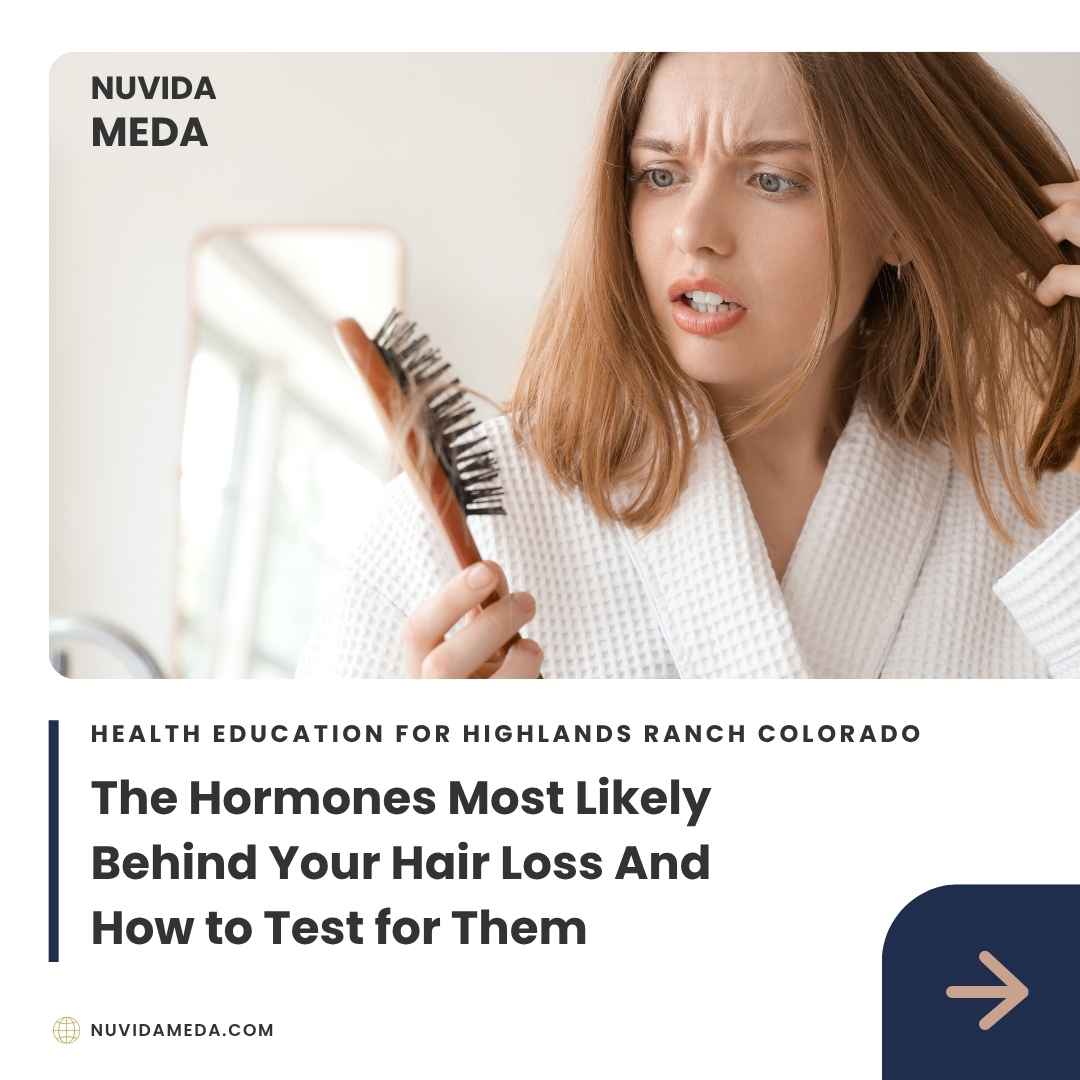
Finding more hair in your brush than usual or noticing your once-full ponytail becoming thinner can be frustrating. For many women, hair thinning begins gradually, making it difficult to pinpoint exactly when the change started.
If you’re over 35, you may wonder whether your hormones are playing a role.
Hormones influence many functions throughout the body, including energy, metabolism, mood, sleep, and hair growth. When hormone levels change, they may affect the normal cycle of hair growth, causing increased shedding or thinner hair over time.
However, hormones are only one piece of the puzzle. Hair loss can also be influenced by genetics, nutrition, stress, certain medications, thyroid function, and other medical conditions.
At NuVida Medical and Aesthetics, we believe the first step is understanding what may be contributing to your symptoms. Instead of recommending the same therapy for everyone, we begin with a physician-led evaluation that considers your medical history, symptoms, and laboratory findings when appropriate.
If you’re searching for hormone imbalance hair loss therapy Highlands Ranch, understanding which hormones may affect hair health can help you have a more informed conversation with your physician.
Hair Growth Depends on More Than Your Hair
Hair follicles are remarkably active structures that constantly cycle through phases of growth, transition, rest, and shedding.
This cycle is influenced by many systems throughout your body, including your endocrine, metabolic, and nutritional health.
When one or more of these systems changes, your hair may respond by:
- Becoming thinner
- Growing more slowly
- Shedding more frequently
- Losing volume
- Feeling finer than it once did
Because so many factors can influence hair growth, successful evaluation begins by looking at your overall health rather than focusing on your hair alone.
Estrogen: A Key Hormone for Healthy Hair
Estrogen plays an important role in supporting the normal hair growth cycle.
As women approach perimenopause and menopause, estrogen levels naturally fluctuate before gradually declining. Some women begin noticing changes in their hair during this transition, including reduced thickness, increased shedding, or slower growth.
Not every woman experiences these changes, and the degree of hair thinning varies from person to person.
Rather than assuming estrogen is the cause, physician evaluation helps determine whether hormone changes may be contributing alongside other health factors.
Progesterone and Hormonal Balance
Progesterone also changes during perimenopause and menopause.
Although progesterone is not usually discussed as often as estrogen when it comes to hair health, it contributes to overall hormonal balance.
Because hormones work together rather than independently, evaluating the broader hormonal picture often provides more useful information than focusing on a single hormone.
Testosterone and Androgens
Women naturally produce small amounts of testosterone and other androgens.
As estrogen levels decline, these hormones may have a greater influence on certain hair follicles. In some women, this can contribute to gradual thinning across the top of the scalp or widening of the hair part.
Hormonal changes involving androgens may occur naturally or be associated with certain medical conditions.
Appropriate laboratory testing and physician evaluation help determine whether further investigation is warranted.
Thyroid Hormones and Hair Health
The thyroid gland regulates metabolism throughout the body.
When thyroid hormone levels are lower or higher than expected, hair thinning may occur alongside symptoms such as:
- Fatigue
- Weight changes
- Dry skin
- Changes in energy
- Feeling unusually cold or warm
Because thyroid-related symptoms overlap with many other conditions, laboratory testing is often necessary before drawing conclusions.
Cortisol and Chronic Stress
Stress hormones may also influence hair growth.
Periods of prolonged emotional or physical stress can affect the normal hair growth cycle, leading to increased shedding several months after the stressful event.
Women sometimes notice increased hair loss following:
- Surgery
- Illness
- Significant emotional stress
- Major life changes
- Rapid weight loss
Managing stress is an important part of overall wellness, although it is rarely the only factor involved.
Insulin and Metabolic Health
Insulin is another hormone that deserves attention.
Insulin helps regulate how your body uses and stores glucose. When insulin resistance develops, the body may produce higher levels of insulin to maintain blood sugar balance.
Although insulin resistance is more commonly discussed in relation to metabolic health and weight management, it may also influence hormonal balance in some women.
Because metabolic health affects many body systems, physician evaluation may include reviewing blood sugar regulation and other metabolic markers when clinically appropriate.
Do You Need Hormone Testing?
Not every woman experiencing hair loss requires extensive hormone testing.
The decision depends on:
- Your age
- Medical history
- Menstrual history
- Symptoms
- Family history
- Current medications
- Overall health
A physician can determine whether laboratory testing may provide helpful information based on your individual situation.
Testing should always be guided by clinical findings rather than performed simply because hair loss is present.
What May Be Included in an Evaluation?
At NuVida Medical and Aesthetics, every patient begins with a conversation.
Your physician may discuss:
- When the hair thinning started
- Whether shedding is sudden or gradual
- Other symptoms you may be experiencing
- Family history of hair loss
- Current medications
- Lifestyle habits
- Nutrition
- Stress levels
When appropriate, laboratory testing may also be recommended to evaluate factors that could be contributing to your symptoms.
Rather than ordering unnecessary testing, the goal is to gather meaningful information that supports personalized care.
Hair Loss Is Often a Sign to Look at the Bigger Picture
Hair thinning rarely occurs in isolation.
Many women experiencing changes in their hair also notice:
- Low energy
- Brain fog
- Difficulty sleeping
- Mood changes
- Weight gain
- Reduced libido
- Feeling unlike themselves
These symptoms do not automatically mean your hormones are out of balance, but together they may provide valuable clues during a comprehensive physician evaluation.
Looking at your health as a whole often leads to more informed recommendations than focusing on one symptom alone.
Why Personalized Testing Matters
Online advice often encourages women to request long lists of hormone tests.
The problem is that laboratory results must always be interpreted within the context of your medical history, symptoms, life stage, and overall health.
Testing without proper evaluation may create unnecessary confusion rather than clear answers.
A physician-guided approach helps ensure that any testing performed is meaningful and supports appropriate decision-making.
Personalized Care Instead of Guesswork
Every woman’s experience with hair thinning is different.
Depending on your evaluation, your physician may recommend a personalized care plan that could include:
- Hormone evaluation when clinically appropriate
- Nutritional guidance
- Lifestyle recommendations
- Personalized supplement strategies
- Weight management support when indicated
- Hair restoration options
- Ongoing physician follow-up
Recommendations are always based on your individual health needs rather than a standard protocol.
Finding Hormone Imbalance Hair Loss Therapy in Highlands Ranch
If you’ve been searching for hormone imbalance hair loss therapy Highlands Ranch, you’ve likely encountered countless products and online advice promising fast results.
The reality is that hair thinning often has multiple contributing factors, and understanding those factors is the key to developing an appropriate therapy plan.
At NuVida Medical and Aesthetics, we take a physician-led approach that begins with listening to your concerns, reviewing your health history, and determining whether laboratory testing may be appropriate based on your symptoms.
Our goal is to provide medical clarity through thoughtful evaluation and personalized care, helping you better understand what may be contributing to your hair changes.
Take the First Step Toward Understanding Your Hair Loss
Hair thinning can affect your confidence, but it should not leave you feeling like you have to navigate the problem on your own.
Whether hormonal changes, metabolic health, thyroid function, nutrition, stress, or other factors are involved, understanding the underlying contributors is the first step toward making informed decisions about your care.
At NuVida Medical and Aesthetics, we believe you deserve more than generic advice or one-size-fits-all solutions. Our physician-led evaluations are designed to help women better understand concerns related to hair thinning, hormone changes, and overall wellness.
If you are looking for hormone imbalance hair loss therapy Highlands Ranch, schedule a consultation with our experienced team. Together, we can review your symptoms, discuss your health history, and determine the next appropriate steps based on your unique needs.
Schedule your consultation today and take the first step toward understanding what may be contributing to your hair thinning.