
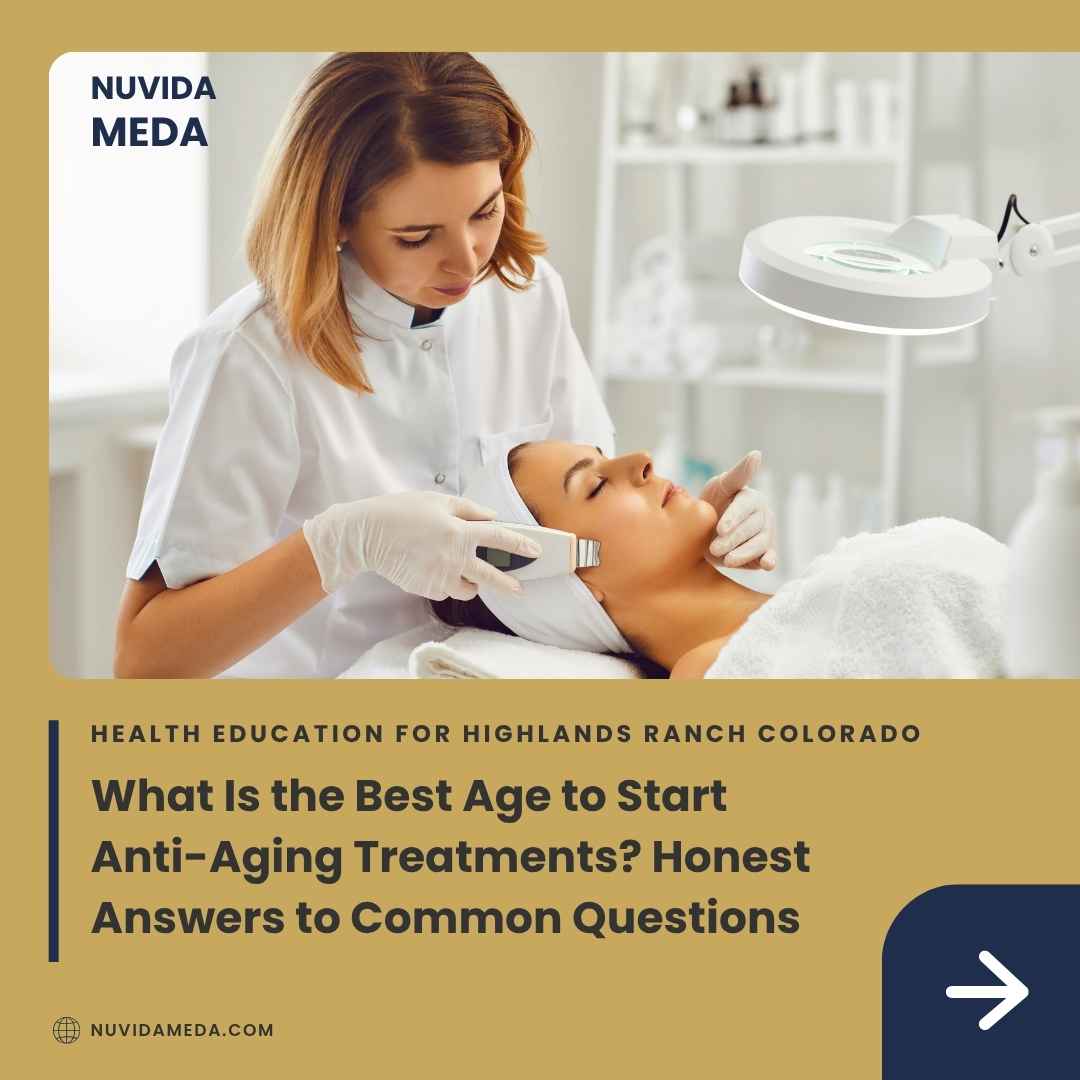
“Isn’t it too early?” “Am I too late?” “Will therapies make my skin look fake?” These are the questions we hear most from patients considering skin rejuvenation. If you’re thinking about anti-aging therapies, you’re probably wondering the same things. Here are honest answers.
This article is for educational purposes only and is not medical advice or a diagnosis. Therapy decisions should always be made with a qualified healthcare provider.
Q: What’s the best age to start anti-aging therapies?
A: There’s no single “best” age—it depends on your skin, your goals, and what’s happening with your skin right now.
Many people start thinking about prevention in their late 20s or early 30s, especially in Colorado where UV damage accumulates faster. Others don’t notice changes they want to address until their 40s or 50s.
The honest answer: the best time to start is when you notice changes that bother you, or when you want to prevent them before they start. Starting early with prevention (good sunscreen habits, maybe a collagen-stimulating therapy or two) can mean less intensive work later. But it’s never “too late”—many patients see dramatic improvements even in their 60s and 70s.
Q: Will anti-aging therapies make my skin look fake or “done”?
A: Not if they’re done well. The goal of modern skin rejuvenation isn’t to look plastic or frozen—it’s to look like the best version of yourself.
A skilled provider focuses on:
- Subtle enhancement, not dramatic change
- Maintaining your facial expressions and natural movement
- Improving skin quality (texture, tone, firmness) not just filling lines
- A gradual approach, building results over time rather than overdoing it all at once
Many people say they look “refreshed” or “like themselves, but better”—not like they’ve had work done.
Q: How many therapies will I need?
A: It depends on your concern and the therapy. Here’s what’s typical:
- Microneedling: A series of 3–6 sessions spaced 4–6 weeks apart for best results; some see improvement after one
- Chemical peels: Often 3–6 sessions for deeper concerns; lighter peels might be ongoing
- Laser therapies: 3–5 sessions for texture or pigmentation; can vary widely
- Injectables: Results from one session; often need touch-ups every 3–12 months depending on the product
- Topical therapies: Ongoing use; results build over weeks to months
Your provider will give you a realistic timeline during your consultation.
Q: What’s the difference between prevention and correction?
A: Prevention means supporting your skin’s health before major signs of aging show up. This might include:
- Excellent sun protection
- High-quality skincare
- Maybe a preventive collagen-building therapy (like microneedling) once or twice a year
Correction means addressing aging signs that are already visible—fine lines, texture loss, volume loss. This usually requires more intensive therapy.
The truth: prevention is easier and less expensive than correction. But correction is absolutely possible at any age.
Q: Are there side effects?
A: Most skin rejuvenation therapies are safe when done by a trained provider. Common temporary effects include:
- Redness or slight swelling (usually 24–72 hours)
- Mild flaking or peeling
- Sensitivity to sun (which is why sunscreen is essential)
- Slight bruising with certain therapies
Serious complications are rare with physician-led care. Your provider will discuss what to expect and how to care for your skin afterward.
Q: How much does it cost?
A: Skin rejuvenation costs vary widely depending on the therapy, how many sessions you need, and your location. In the Highlands Ranch area, you might spend:
- Microneedling: $300–$800 per session
- Chemical peels: $200–$600 per session
- Laser therapies: $500–$2,000+ per session
- Injectables: $200–$800+ per area
Many people find that investing in a series of therapies costs less than they’d spend on skincare products over the same period—and delivers better results. Some practices offer package pricing for multiple sessions.
Your provider can discuss cost options and what fits your budget.
Q: Can I do therapies year-round, or is there a best season?
A: You can pursue many therapies year-round, but Colorado’s seasons matter.
Best seasons for intensive therapy:
Fall and winter. You’re indoors more, it’s easier to protect treated skin from sun, and you can see results by spring/summer.
Possible year-round:
Gentler therapies, maintenance sessions, or therapies that don’t require downtime.
Plan your intensive rejuvenation plan for fall if you want to look your best for summer events and holidays.
Q: What should I do after therapy?
A: This varies by therapy, but generally:
- Avoid direct sun (or use SPF 50+)
- Skip intense exercise for 24–48 hours
- Stay hydrated
- Don’t pick, rub, or irritate treated skin
- Use gentle skincare as recommended by your provider
- Avoid other active therapies for the recommended timeframe
Your provider will give you detailed aftercare instructions.
Q: How long do results last?
A: Again, it depends on the therapy:
- Collagen-building therapies (microneedling, laser): Results continue improving for months and can last 1–2 years; maintenance therapies extend results
- Injectables: Results fade over time; most need refreshing every 3–12 months
- Topical improvements: Require ongoing use; improvements fade when you stop
The key: maintenance matters. Skin ages continuously. Maintaining results often means occasional touch-ups and great skincare habits.
Getting Started
If these questions resonate with you, it’s time for a conversation. A physician-led consultation will answer your specific questions and help you understand what’s realistic for your skin.
Schedule Your Consultation
Ready to explore anti-aging options? Schedule your consultation with NuVida Medical and Aesthetics. We’ll answer your questions and build a personalized plan for your skin goals.