
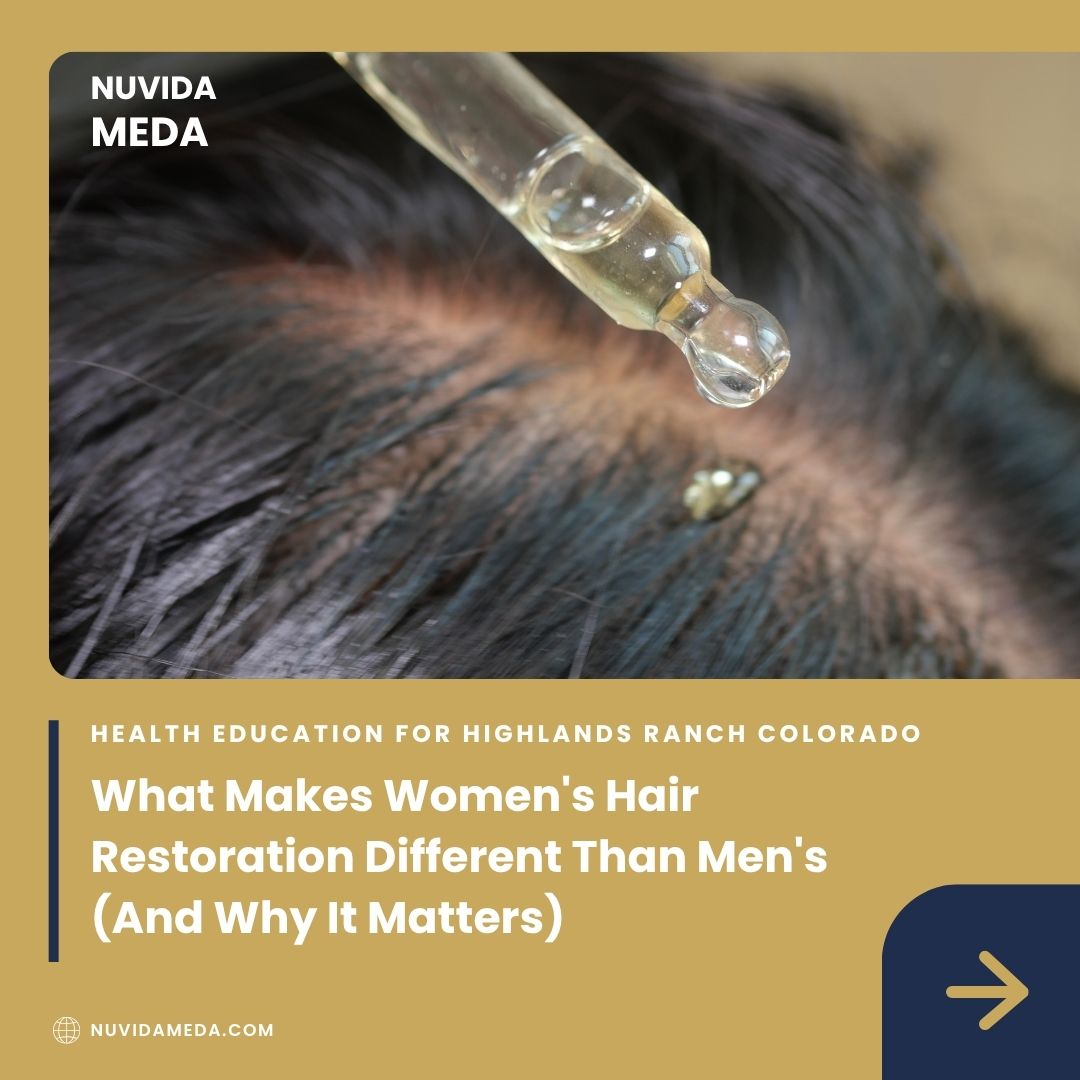
Hair loss is often portrayed as a men’s issue, but the reality is quite different. Millions of women experience hair thinning every year, and while the emotional impact can be significant, many women don’t realize that the causes, evaluation, and therapy of female hair loss are often very different from those of men.
This distinction matters because therapies that work well for one person may not be appropriate for another. A strategy designed for male pattern baldness may overlook the hormonal, metabolic, or medical factors that frequently contribute to hair thinning in women.
At NuVida Medical and Aesthetics, we believe successful hair restoration begins with understanding the individual patient rather than simply treating the symptom. Our physician-led approach focuses on identifying what may be contributing to hair loss before recommending personalized therapy options.
If you’re researching hair restoration for women Highlands Ranch, understanding how female hair loss differs from male hair loss can help you make more informed decisions about your care.
Hair Loss Is Common for Women, Too
Although male hair loss receives more public attention, female hair thinning is remarkably common.
Many women begin noticing changes in their late 30s or 40s, while others experience thinning earlier or later in life. Some first notice a widening part, while others see more hair collecting in the shower or find that their ponytail no longer feels as thick.
Unlike men, women often experience diffuse thinning across the scalp instead of developing distinct bald spots. Because the changes are gradual, many women wait months or even years before seeking medical advice.
Early evaluation can help identify contributing factors before hair thinning becomes more advanced.
Women’s Hair Loss Is Often More Complex
One of the biggest differences between male and female hair loss is the number of factors involved.
For many men, genetics and sensitivity to the hormone dihydrotestosterone (DHT) are the primary contributors to male pattern baldness.
Women’s hair loss, however, is often multifactorial.
Several factors may contribute simultaneously, including:
- Hormonal changes
- Genetics
- Thyroid disorders
- Nutritional deficiencies
- Iron deficiency
- Chronic stress
- Certain medications
- Pregnancy and postpartum changes
- Perimenopause and menopause
- Metabolic health
Because multiple factors may overlap, successful therapy often requires looking beyond the scalp itself.
The Pattern of Hair Loss Is Different
Male pattern hair loss typically follows a recognizable progression.
Men often experience:
- Receding hairlines
- Thinning at the crown
- Distinct bald patches
Women usually experience something different.
Common patterns include:
- Gradual thinning across the top of the scalp
- A widening center part
- Reduced overall hair density
- Decreased ponytail volume
- Increased shedding without complete baldness
Because women often retain their frontal hairline, hair thinning may be overlooked until it becomes more noticeable.
Hormones Play a Bigger Role in Women’s Hair Health
Hormonal changes influence many aspects of women’s health, including hair growth.
Throughout life, hormone levels naturally fluctuate during:
- Pregnancy
- Postpartum recovery
- Perimenopause
- Menopause
Changes in estrogen and progesterone can affect the normal hair growth cycle. As estrogen levels decline during midlife, some women notice increased shedding or reduced hair density.
This does not mean hormones are always responsible for hair loss, but they are an important consideration during physician evaluation.
At NuVida Medical and Aesthetics, hormone health is evaluated alongside other possible contributing factors rather than being viewed in isolation.
Medical Conditions Are More Common Contributors
Women’s hair thinning is more likely to be associated with underlying medical conditions than many people realize.
Examples include:
- Thyroid disorders
- Iron deficiency
- Autoimmune conditions
- Nutritional deficiencies
- Polycystic ovary syndrome (PCOS)
- Chronic illness
- Metabolic dysfunction
Because many of these conditions produce symptoms beyond hair loss, a comprehensive medical history and appropriate laboratory testing may provide valuable insight.
Treating hair thinning without identifying these underlying issues may lead to disappointing results.
Emotional Impact Can Be Greater for Women
Hair often carries a strong connection to identity, femininity, and self-confidence.
For many women, thinning hair affects far more than appearance.
It may influence:
- Self-esteem
- Social confidence
- Professional interactions
- Willingness to style or wear hair differently
- Overall quality of life
Unfortunately, women are sometimes told that hair thinning is simply a normal part of aging.
While aging can certainly influence hair health, that does not mean your concerns should be dismissed. Understanding what may be contributing to your symptoms is an important part of personalized care.
Why a One-Size-Fits-All Therapy Doesn’t Work
Because female hair loss has many possible causes, there is rarely one therapy that works for everyone.
For example:
A woman experiencing hormone-related hair thinning during menopause may require a different approach than someone whose hair loss is related to iron deficiency or thyroid disease.
Similarly, someone experiencing stress-related shedding may benefit from a different strategy than someone with hereditary female pattern hair loss.
That is why physician-led evaluation is so valuable.
Rather than recommending the same products for every patient, therapy plans should reflect each woman’s unique health history and contributing factors.
What Does a Comprehensive Hair Evaluation Include?
At NuVida Medical and Aesthetics, hair restoration begins with understanding the whole person.
Your evaluation may include:
- Discussion of when hair thinning began
- Review of your medical history
- Current medications
- Family history of hair loss
- Lifestyle habits
- Nutrition
- Stress levels
- Hormonal symptoms
- Laboratory testing when clinically appropriate
Looking at these factors together helps create a clearer picture of what may be affecting your hair health.
Hair Restoration Options May Look Different for Women
Because women’s hair loss often involves multiple contributing factors, therapy plans frequently combine several approaches.
Depending on your evaluation, recommendations may include:
- Hormone evaluation when clinically appropriate
- Nutritional guidance
- Personalized supplement recommendations
- Physician-directed topical therapies
- Platelet-rich plasma (PRP) when appropriate
- Hair restoration procedures
- Lifestyle modifications
- Ongoing physician follow-up
Rather than focusing on a single therapy, personalized care addresses the factors most relevant to your individual situation.
Patience Is an Important Part of Hair Restoration
Many women hope for immediate improvement once therapy begins.
However, hair grows slowly.
Most therapy plans require several months before meaningful changes become noticeable because hair follicles naturally progress through growth cycles.
It is also important to remember that therapy goals vary.
For some women, success may mean slowing further hair thinning.
For others, the goal may be improving density, supporting healthier hair growth, or enhancing overall scalp health.
Your physician can help establish realistic expectations based on your diagnosis and therapy plan.
Why Physician-Led Care Matters
The internet offers endless advice about hair loss, but much of it assumes every patient has the same problem.
At NuVida Medical and Aesthetics, we believe women deserve a more thoughtful approach.
Our physician-led evaluations focus on:
- Identifying contributing factors
- Reviewing medical history
- Considering hormonal health
- Evaluating metabolic wellness
- Ordering laboratory testing when appropriate
- Developing personalized therapy recommendations
This comprehensive approach allows therapy decisions to be guided by medical evaluation rather than marketing trends.
Hair Restoration for Women in Highlands Ranch Starts With Personalized Care
If you’ve been searching for hair restoration for women Highlands Ranch, it’s important to remember that your hair loss story is unique.
No two women experience hair thinning in exactly the same way, and no single therapy is appropriate for everyone.
At NuVida Medical and Aesthetics, we begin with listening. We take time to understand your symptoms, health history, lifestyle, and goals before discussing therapy options.
Whether your hair thinning is related to hormonal changes, genetics, nutrition, stress, metabolic health, or several factors working together, our physician-led approach is designed to provide individualized recommendations that support both your hair health and your overall well-being.
Take the First Step Toward Understanding Your Hair Loss
Hair thinning can feel isolating, but you are far from alone. More importantly, you don’t have to navigate your options by yourself.
Understanding the reason behind your hair changes is the foundation of developing a therapy plan that makes sense for your individual needs.
At NuVida Medical and Aesthetics, we provide comprehensive evaluations and personalized care for women experiencing hair thinning and hair loss. Our goal is to help you gain medical clarity, understand your options, and create a plan that supports your long-term health.
If you’re looking for hair restoration for women Highlands Ranch, schedule a consultation with our experienced team today. Together, we’ll explore the factors contributing to your hair loss and develop a personalized strategy designed around your health, your goals, and your lifestyle.
Schedule your consultation today and take the first step toward healthier, fuller-looking hair with physician-led care tailored specifically for women.