

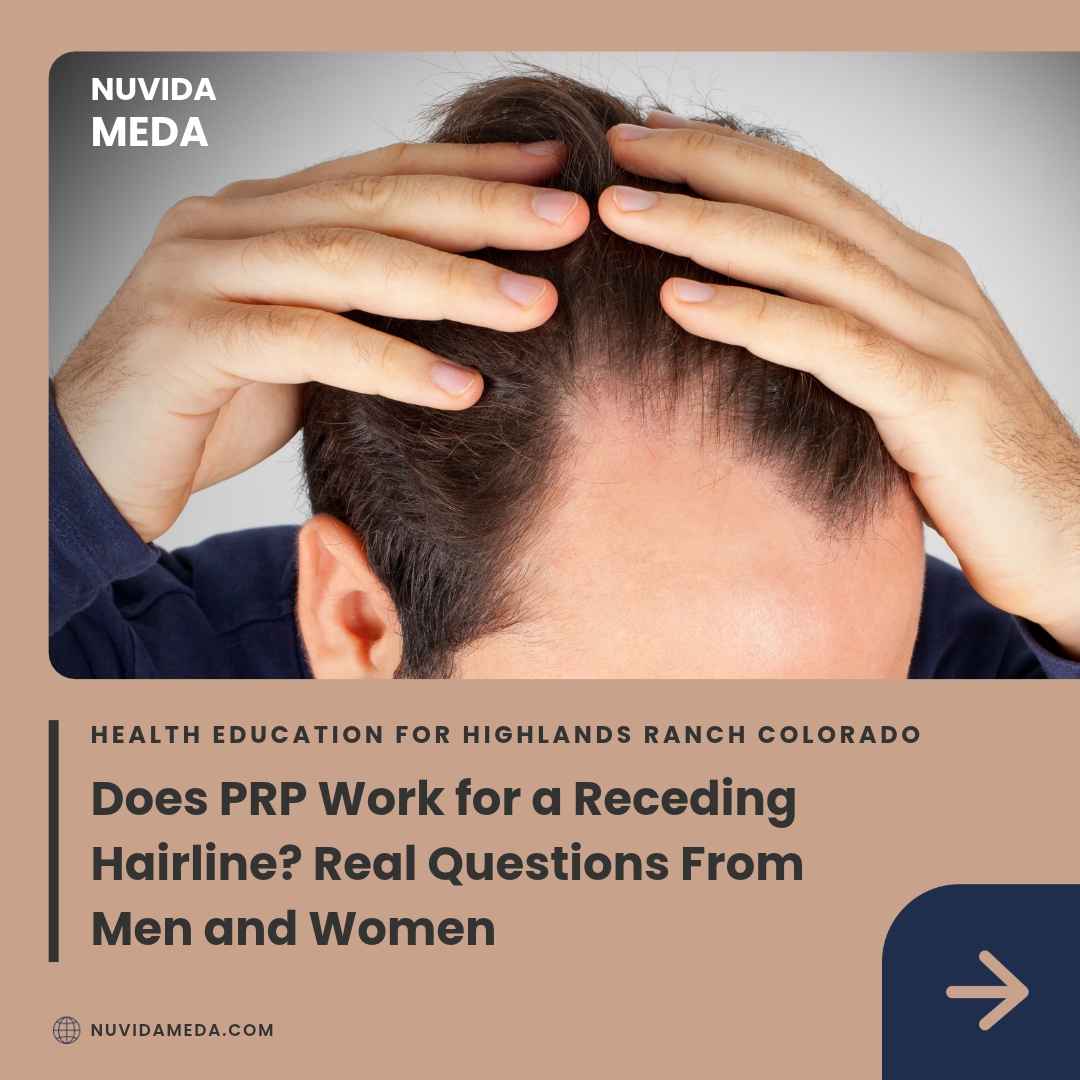
If you have started parting your hair differently to hide where it has moved back, you are not alone.
The hairline is usually the first place people notice change, and it is the question we hear more than any other.
The honest answer about PRP for a receding hairline is more nuanced than either the marketing or the skeptics suggest, so here is what we actually tell patients in Highlands Ranch.
This article is for educational purposes only and is not medical advice or a diagnosis. Therapy decisions should always be made with a qualified healthcare provider.
Does PRP Work on a Receding Hairline?
It depends almost entirely on what is still there.
PRP is studied as a way to support follicles that are present but underperforming. Where follicles have been gone for years, no injection brings them back.
That is why the first appointment is an examination rather than a sales pitch.
The Difference Between Thinning and Bare
Look closely at the area that concerns you, ideally in good light:
- If you see fine, short, wispy hairs, follicles are likely still active but miniaturized
- If the skin looks genuinely smooth and bare, those follicles may no longer be producing
- If the change happened quickly, something other than pattern loss may be involved
- If the hairline is receding unevenly, styling tension could be a contributor
This is exactly the kind of distinction a physician should make in person rather than from a photo.
Why the Hairline Is a Harder Zone
The frontal hairline tends to respond less predictably than the crown or the mid-scalp in published research.
Studies suggest the crown often shows measurable change sooner, which is why we set different expectations depending on where your thinning sits.
The hairline also has less forgiving optics. A small change at the crown can go unnoticed, while the same change at the front is the first thing you see every morning.
Is This the Same for Men and Women?
The pattern of loss usually differs, and so does the conversation.
What Men Typically Describe
Men more often notice temple recession and a thinning crown, frequently with a family history behind it.
Testosterone and its byproducts can play a role, which is part of why we sometimes evaluate hormones alongside the scalp.
Men also tend to arrive later than women do, often after several years of gradual change, which narrows the options available.
What Women Typically Describe
Women more often describe a widening part, a smaller ponytail, and diffuse thinning rather than a sharply receding line.
Perimenopause, postpartum changes, thyroid issues, and iron levels all belong in that conversation. We covered the female pattern in more depth in causes of hair thinning.
When a woman does see true frontal recession, it is worth a careful look, because traction and certain scalp conditions can mimic pattern loss.
The Questions Patients Ask Us Most
How Soon Would I See Anything?
Not quickly, and that is worth knowing before you start.
Because the hair cycle turns over slowly, many patients report noticing reduced shedding before they notice regrowth, often in the range of a few months. Results vary.
Does It Hurt?
Most patients describe the injections as brief pressure or stinging rather than sharp pain, and numbing is used for comfort.
Scalp tenderness for a day or so afterward is commonly reported.
Is There Any Downtime?
Most people go back to their normal day, with a few sensible limits for the first day or two:
- Holding off on intense workouts until the following morning
- Waiting before washing or applying products, per your aftercare instructions
- Skipping hats that sit tightly on the treated area
- Protecting the scalp from direct Colorado sun
How Should I Prepare for the First Visit?
Come hydrated, bring your medication and supplement list, and bring older photos if you have them.
Photos from a year or two ago are often more informative than anything we can measure in a single appointment.
What If I Have Already Tried Other Products?
Tell us about all of it, including anything you stopped.
What has already helped, and what has not, is real clinical information, and it changes what we would suggest next.
Will I Have to Keep Doing It?
PRP is generally approached as ongoing support rather than a one-time correction.
Whatever caused the thinning is usually still present, so maintenance is typically part of the plan when the initial series goes well.
Can I Combine It With Other Therapies?
Often yes, when clinically appropriate. Combinations we may discuss include:
- Topical or oral therapies, where suitable for you
- Correcting iron, vitamin D, or thyroid issues found on labs
- Hormone evaluation and support when indicated
- Nutrition and stress factors that influence the growth cycle
If you have been comparing regenerative options, our breakdown of exosomes vs. PRP may help.
What If PRP Is Not Right for Me?
Then we will say so.
Some patients are better served by addressing an underlying cause first, and some hairlines are better suited to surgical consultation elsewhere. You can see the range of approaches on our hair restoration page.
Why Physician-Led Care Matters for Hairline Questions
A receding hairline can look the same on the surface whether the cause is genetic, hormonal, nutritional, or mechanical.
A physician-led evaluation generally includes listening to your history, reviewing medications and family patterns, ordering labs when appropriate, building a personalized plan, and monitoring it over time.
That last part matters. Without follow-up, nobody knows whether the plan is working or simply expensive.
It also means someone is watching for the things a hair-only approach would miss, including thyroid changes and iron levels that quietly undercut everything else.
Schedule Your Consultation
If your hairline has been changing and you want a clear answer about whether PRP for a receding hairline makes sense for you, a physician should look at it directly.
We see patients from across Highlands Ranch and the surrounding Colorado communities, and we will give you our honest read either way.
Schedule your consultation with NuVida Medical and Aesthetics.