
If you have been comparing skin therapies and feel more confused than when you started, you are not alone. Every option sounds impressive, and almost none of them explain how they actually differ.
Here is a plainer way to think about it: therapies differ mainly in what they do to the skin and what they leave behind to help it heal.
That distinction is the whole argument for microneedling with PRP, and it is worth understanding before you spend money in Highlands Ranch or anywhere else in Colorado.
This article is for educational purposes only and is not medical advice or a diagnosis. Therapy decisions should always be made with a qualified healthcare provider.
The Two Jobs Every Skin Therapy Is Doing
Nearly every rejuvenation therapy works by prompting the skin to repair itself.
So there are really only two variables that matter:
- The stimulus: how the skin is prompted, whether by needles, heat, light, or a chemical agent
- The support: what conditions the skin has to work with while it repairs
- The recovery cost: how much downtime and irritation the stimulus creates along the way
Most marketing talks only about the stimulus. The support side is where PRP enters the conversation.
Microneedling Alone: A Strong Stimulus
Microneedling creates controlled micro-channels that signal the skin to begin collagen production.
On its own, it remains a well-established approach with a long track record for texture and tone concerns.
What microneedling alone does not do is add anything to the healing environment. It asks the skin to repair using whatever resources it already has.
Adding PRP: Support for the Healing Phase
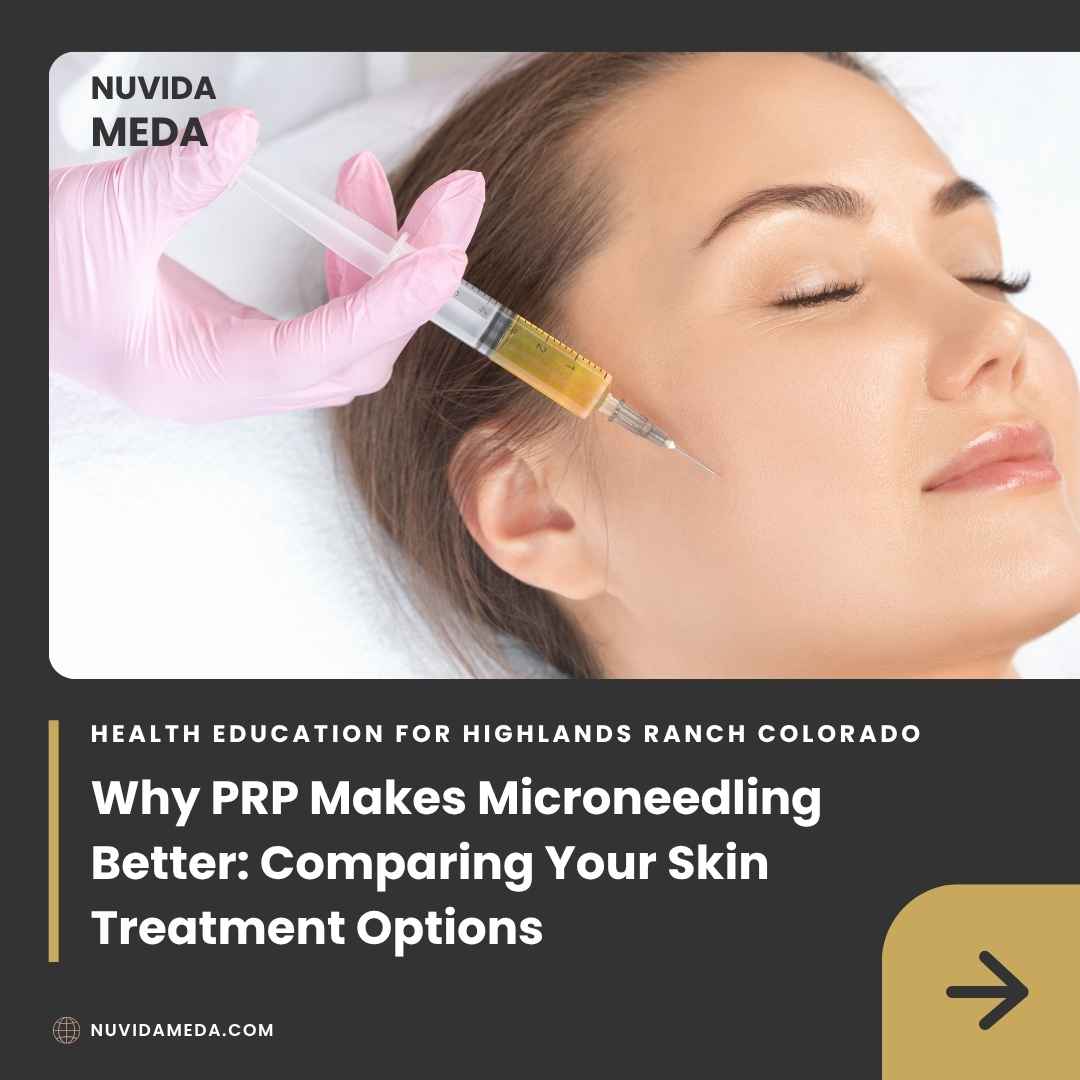
PRP is platelet-rich plasma, concentrated from a small sample of your own blood.
Platelets carry growth factors that participate in ordinary tissue repair, which is the rationale for applying them to freshly treated skin:
- The micro-channels may allow PRP to reach past the surface layer
- Growth factors are part of the normal signaling that recruits repair cells
- Because the material comes from you, reaction to the PRP itself is not a typical concern
- Some patients report that redness settles more comfortably, though this varies
- Studies suggest the combination may help support texture outcomes for some patients
The honest framing is that PRP is a supportive addition with encouraging evidence, not a guarantee. Results vary, and outcomes are individual.
Our detailed breakdown of microneedling with PRP at NuVida Medical and Aesthetics explains how we approach the combination.
How Microneedling With PRP Compares to Other Options
Topical skincare
Good skincare is foundational and works on the surface over months.
It is a maintenance tool rather than a structural one, and it pairs with in-office therapy rather than competing with it.
Chemical peels
Peels work chemically on the surface layers and are often chosen for tone, brightness, and pigment concerns.
Depth and downtime vary widely by formulation.
Energy-based devices
Laser and radiofrequency therapies use heat or light as the stimulus and can be excellent tools in the right hands.
Suitability depends heavily on skin type, pigment risk, and recent sun exposure, which is a real consideration for people living an outdoor Colorado lifestyle.
Injectables
Neuromodulators and fillers address movement lines and volume, which is a different problem than skin quality.
They do not compete with collagen induction. They answer a different question.
The Better Question Than Which Therapy Is Best
There is no single best therapy, and any clinic claiming one should give you pause.
The more useful questions are:
- What is the actual concern, in structural terms rather than marketing terms?
- How much downtime does my life realistically allow?
- What is my skin type, and does that rule anything in or out?
- Is anything internal, such as hormones or metabolic health, contributing?
- What sequence makes sense over the next six to twelve months?
That last question is where a broader skin rejuvenation and anti-aging plan matters more than any single procedure. Individual therapies are tactics; the plan is the strategy.
Why Physician-Led Care Matters
Skin is an organ, and it reflects what is happening in the rest of the body.
Hormonal shifts, thyroid function, blood sugar, nutrition, sleep, and stress all influence how skin looks and how well it heals. Our article on microneedling and PRP for hormonal and age-related skin changes explores that connection.
A physician-led practice is set up to account for that:
- Listening carefully before recommending any procedure
- Reviewing your health history, medications, and prior therapies
- Ordering laboratory work when clinically appropriate
- Building a personalized, sequenced plan rather than selling a package
- Monitoring how you respond and adjusting over time
If you want the underlying biology first, start with how microneedling with PRP works and the science of collagen induction.
Where Microneedling With PRP Fits
For many patients focused on texture, fine lines, and overall skin quality, microneedling with PRP is a reasonable place to begin, because it pairs a well-established stimulus with support drawn from the patient’s own body.
For others, something else should come first, and a good provider will say so.
Schedule Your Consultation
You do not have to sort through these options alone. We will look at your skin, listen to your goals, and lay out an honest sequence for patients across Highlands Ranch, Lone Tree, Greenwood Village, and Littleton.
Schedule your consultation with NuVida Medical and Aesthetics.