

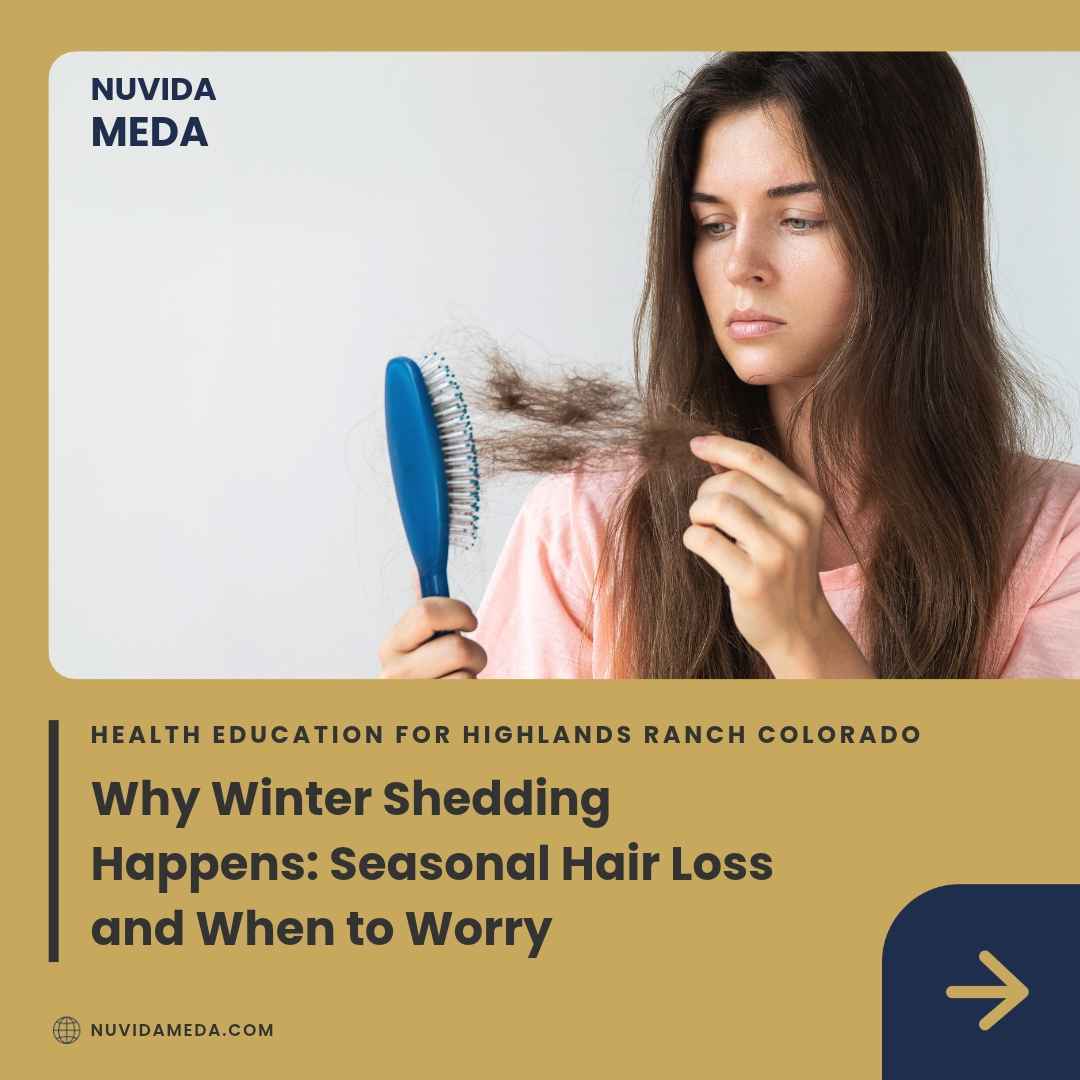
If the hair in your brush has picked up noticeably since the weather turned, you are not alone.
Fall and early winter bring a wave of this exact question into our Highlands Ranch office every single year.
Seasonal hair shedding is a real phenomenon, and most of the time it is not the beginning of something permanent. The useful skill is knowing where ordinary seasonal shedding ends and a pattern worth investigating begins.
This article is for educational purposes only and is not medical advice or a diagnosis. Therapy decisions should always be made with a qualified healthcare provider.
What Seasonal Hair Shedding Actually Is
Your follicles do not all work on the same schedule, and they never have.
Each one cycles between growing, transitioning, and resting. Hair releases at the end of the resting phase, which is why daily shedding is normal.
Why Those Cycles Seem to Sync Up
Studies suggest a larger share of follicles enter the resting phase during late summer, with the resulting shed showing up weeks later in autumn.
The leading theories involve seasonal light exposure and the body’s long evolutionary habit of adjusting coat density. The mechanism is not fully settled, but the pattern is well documented.
What matters clinically is the delay. The shed you are seeing in October often reflects something that happened to your follicles in August.
What Colorado Adds to the Picture
Our climate does not cause hair loss, but it can make the season feel worse:
- Very low winter humidity leaves hair drier and more prone to breakage
- Higher-altitude UV exposure continues year-round, including on the scalp
- Indoor heating pulls even more moisture from hair and skin
- Hats and friction add mechanical stress over months of cold weather
- Shorter days mean less sunlight, which can affect vitamin D levels
Breakage is not the same as shedding, though in the mirror they can look identical.
A shed hair comes out at full length with a small white bulb at the root. A broken hair is short and blunt, and it points to dryness and handling rather than the follicle itself.
How to Tell Normal From Not
Nobody counts individual hairs, so we look at the shape of the change instead.
Signs That Usually Point to a Seasonal Shed
Reassuring features tend to include:
- The increase arrived fairly suddenly and lines up with the season
- Shedding is spread evenly across the scalp rather than concentrated in one zone
- Your part and hairline look the same as they did last spring
- The hairs coming out are full-length rather than short and fine
- Things settle back down within roughly two to three months
Signs Worth Getting Checked
We would rather see you early than have you wait a year. Consider an evaluation if:
- Shedding has continued well past three months
- Your part is visibly wider or your ponytail noticeably smaller than a year ago
- Thinning is concentrated at the crown, temples, or along the part
- The hairs coming out are short, fine, or tapered
- Shedding comes with fatigue, weight change, cycle changes, or low mood
- You see scalp irritation, scaling, patches, or tenderness
That last cluster matters because hair is often where a systemic issue shows up first.
When the Season Is Not the Whole Story: Hormones
This is the part that gets missed most often.
A seasonal shed is temporary. A hormonal shift is not, and the two can overlap in the same autumn, which makes the shed look alarming while the real driver goes unnoticed.
Hormonal Factors We Look At
Depending on your history, an evaluation may include:
- Thyroid function, which influences the growth cycle directly
- Estrogen and progesterone changes through perimenopause and menopause
- Testosterone and its byproducts in both men and women
- Iron, ferritin, and vitamin D, which often sit lower in winter
- Cortisol patterns during unusually stressful stretches
When labs point that direction, hormone optimization may be part of the conversation, when clinically appropriate.
We went deeper into that connection in hormones and hair, and into testing specifics in which hormones to test.
Why Timing Confuses the Picture
Hormonal change is gradual, so it rarely announces itself the way a seasonal shed does.
Many patients tell us the autumn shed was simply what finally pushed them to get checked, and the labs then explained something that had been building for a year or more.
Why Winter Is a Good Time to Start, Not Wait
Most people wait until spring, hoping the shedding stops on its own.
The trouble is that hair responds on a months-long timeline, so a plan started in winter is working with the calendar rather than against it.
What Starting Now Can Look Like
A reasonable winter plan often involves:
- Getting labs drawn now rather than guessing at causes
- Correcting any deficiencies found before spring
- Beginning scalp-directed therapy such as PRP if you are a candidate
- Protecting the hair you have from winter dryness and friction
- Rechecking in a few months so decisions are based on data
If PRP is one of the options you are weighing, our overview of hair restoration explains how we approach it.
Protecting the Hair You Already Have
None of this replaces therapy, but it reduces the breakage that makes a shed look worse than it is:
- Washing with lukewarm rather than hot water
- Using a conditioner through the mid-lengths and ends
- Cutting back on high-heat styling during the driest months
- Loosening ponytails, buns, and braids that pull at the hairline
- Letting hair dry a little before pulling a hat on in the cold
Why Physician-Led Care Matters
Telling a seasonal shed apart from early pattern loss or a thyroid problem is a clinical judgment, not a guess.
Our approach is to listen to the timeline, review your health history, order labs when appropriate, build a plan that fits what we find, and monitor it with you over the following months.
Sometimes the most valuable outcome is simply being told that what you are seeing is normal, and why.
Schedule Your Consultation
If your seasonal hair shedding has lasted longer than it should, or your part looks different than it did last year, that is worth a conversation.
We see patients from Highlands Ranch, Lone Tree, Greenwood Village, and Littleton, and we will tell you honestly what we think is going on.
Schedule your consultation with NuVida Medical and Aesthetics.