
If you have already tried the shampoos, the serums, and the vitamins and your hair is still thinning, you are not alone.
Most of the people who come to us have been working on this quietly for a year or more before they ask anyone.
Hair restoration in Highlands Ranch, CO looks different in a medical office than it does on a store shelf, and the difference starts with figuring out what is driving your thinning in the first place. You can read more about our hair restoration program, or keep reading for what an evaluation actually involves.
This article is for educational purposes only and is not medical advice or a diagnosis. Therapy decisions should always be made with a qualified healthcare provider.
What Hair Restoration Means in a Medical Setting
The phrase gets used loosely, so it helps to be specific about what it means here.
It Starts With a Cause, Not a Product
Thinning hair is a symptom, and symptoms can have very different sources.
Genetic pattern loss, a thyroid shift, low iron, a recent illness, and a hormonal transition all look similar in the mirror and behave very differently on the scalp.
If the mechanics of that are new to you, our explainer on why hair loss happens is a good starting point.
It Usually Combines More Than One Tool
Hair has several inputs, so a single product rarely carries a whole plan.
A plan built in a clinical setting may layer in-office therapy, at-home support, and correction of an underlying driver at the same time.
What Happens at Your First Visit in Highlands Ranch
Nothing about the first appointment is a commitment to therapy.
The Conversation
We start by asking when you first noticed the change and what else was happening in your life around that time.
We also review your medications, your family history, your diet, and any recent illness, surgery, or major stress.
The Scalp Exam
Looking at the scalp directly tells us things a photo cannot.
We look at the pattern of thinning, the caliber of the remaining hairs, and whether there is inflammation, scaling, or scarring.
Labs When Clinically Appropriate
Not everyone needs bloodwork, but many people benefit from it. Depending on your history, labs may look at:
- Thyroid function
- Iron and ferritin stores
- Vitamin D
- Sex hormones, including testosterone and estrogen
- Markers of blood sugar and metabolic health
- Inflammation, when the picture suggests it
Results are reviewed with you in plain language, not handed over as a printout.
The Approaches We May Consider
Which of these ends up in your plan depends entirely on what the evaluation shows.
Regenerative In-Office Therapy
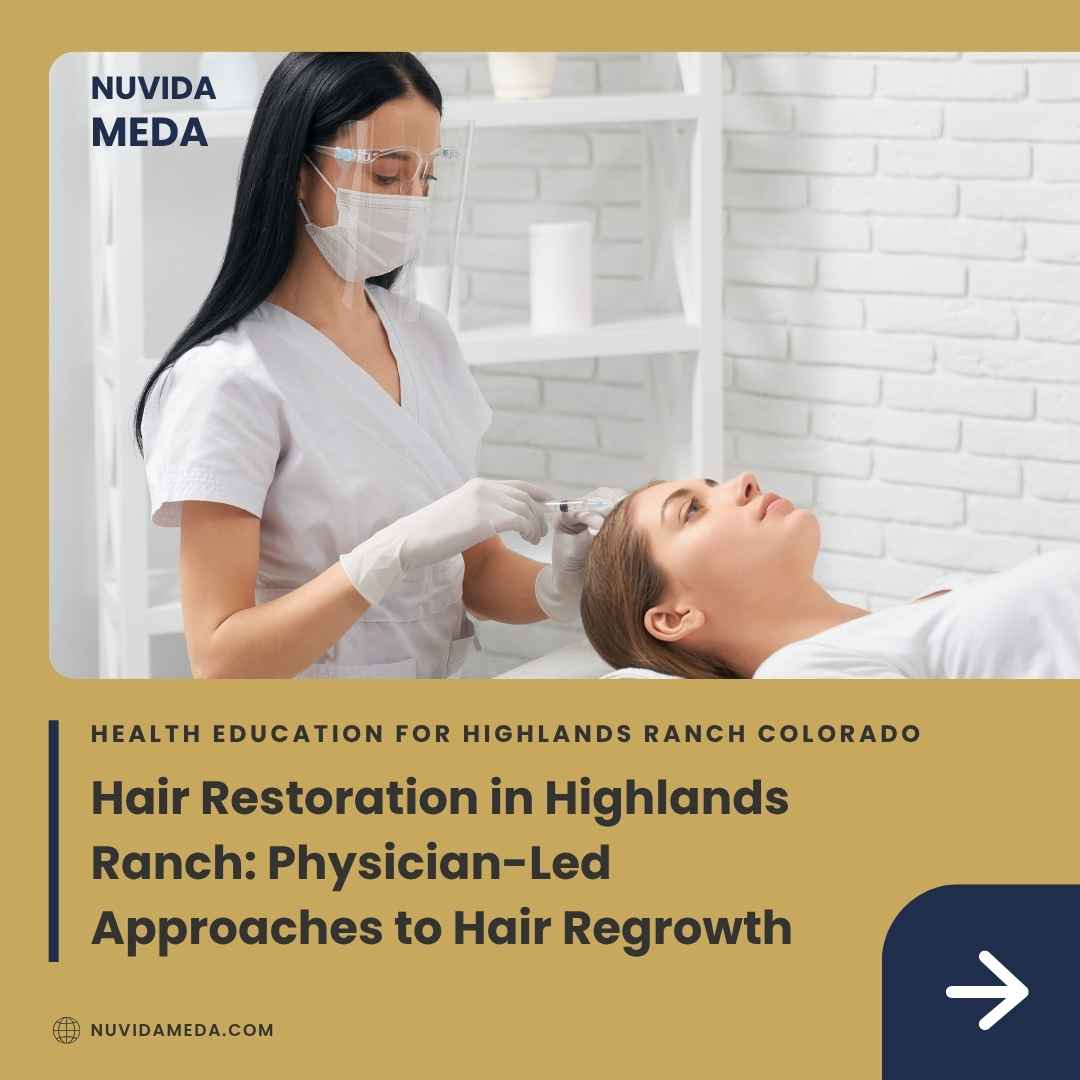
Platelet-rich plasma and related regenerative approaches aim to deliver growth signals directly to the scalp, where follicles can use them.
These are typically done as a short series of sessions rather than a one-time visit, and many patients report gradual change over several months.
Topical and Oral Support
Some patients do well with medical topicals or oral options when those are clinically appropriate for them.
Our side-by-side breakdown compares these options honestly, including their limits.
Addressing the Underlying Driver
If labs point to a thyroid issue, an iron gap, or a hormonal shift, treating the hair alone tends to be an uphill climb.
Supporting the underlying issue may help support the scalp at the same time, when clinically appropriate.
Nutrition, Protein, and Scalp Care
Colorado’s dry air and strong UV exposure are hard on a scalp, and the basics still matter.
Adequate protein, sun protection, and gentler styling are unglamorous, but they protect the work you are paying for.
How Progress Gets Tracked
Hair moves slowly, and memory is unreliable, so progress needs to be measured rather than guessed. That typically means:
- Standardized photos taken in consistent lighting
- Notes on shedding volume over time
- Repeat labs when a lab value was part of the plan
- Honest check-ins at set intervals rather than only when something feels wrong
- Adjusting the plan when the response is not what we hoped
Most approaches need three to six months before a fair judgment is possible.
Results vary, and part of our job is telling you when something is not working.
Why Physician-Led Care Matters Here
Hair loss sits at the intersection of dermatology, endocrinology, and nutrition, which is why a single-product approach so often stalls. A physician-led program means:
- Listening before recommending anything
- Reviewing your full health history, not just your scalp
- Ordering and interpreting labs when appropriate
- Building a plan around your cause and your goals
- Monitoring over time and changing course when needed
- Telling you plainly when therapy is unlikely to help
Men and women also tend to need different plans, which we cover in our piece on women’s versus men’s hair loss.
Schedule Your Consultation
If your hair has been changing and you are tired of guessing, an evaluation is a reasonable next step.
We see patients from Highlands Ranch, Lone Tree, Greenwood Village, and Littleton, and we will be straightforward with you about what is and is not likely to help.
Call (720) 417-3460 or schedule your consultation with NuVida Medical and Aesthetics.